Showing posts with label Books Shows Music. Show all posts

Thursday, 9 January 2014

Turner Prize 2013


At last, Sarah and I made it to the Turner Prize 2013 exhibition, albeit on its last day, in 2014.

Now, last year I went on a guided tour of the Ebrington site and let me tell you, inside those ex-army buildings it was damp, peeling, and not conducive to an appreciation of art.  What they've done to the old barracks to make it such a fantastic gallery space is sheer brilliance.  Hopefully we get to keep it beyond City of Culture year.

Gallery 1 first.  David Shrigley thought the piece for which he was nominated didn't actually work in the gallery, so he exhibited another.  He seems a playful guy who can laugh at himself and tease his critics.  Apparently, he has a rep for not being very good.  So, for the Derry exhibit, he set up a rather roughshod model in the middle of the room, surrounded by chairs, artist's materials at the back.  Yes, it was a life drawing class!  Shrigley's model is designed in deliberately strange proportions - trailing arms, paunch, gaping ears.  The 'finish' isn't elegant.  A mediocre high school art student could have produced the visual.

But of course the 'art' was the experience, the challenge. The most technically brilliant sketcher would inevitably produce a drawing reminiscent of a novice with no feel for perspective, thus levelling out participants and making it accessible, perhaps humbling the artistically proud at the same time.

More fun than attempting my own piece was looking at the ones posted around the gallery.  It wasn't just perspective that bore on individual results, but people seemed to see the same thing albeit from various angles, and yet see something entirely different: some dressed him, coloured him, bent him completely out of shape, in order to represent what they saw, or felt.

Gallery 2 housed the winning installation, Wantee by Laure Prouvost, a French artist resident in North West England.  We entered Grandma's kitchen, full of teapots and dirt.  On the screen we viewed a docu-film about ... well, several strands of narrative, enriched (fragmented?) by interruptions, overlaid voices and captions, noises.  Crucially, we were viewing the film from within the set.  The boundary between fact and fiction, observer and observed, was blurry and in flux as the film rolled.  

Entering an adjacent room, sloping carpeted floor, pink walls on one of which was a small screen with abstract images, another layer was added. What was real, and what was art?  What was mistake and what was deliberate?

We left that one wondering.  Would anyone else have attached the same meanings to things as we had?  Talking that one out, tying up any ends, would have defeated the purpose.  It just felt that disorientation was intended, not as an impetus to understanding, but for its own sake.  

In some ways, the whole Turner Prize thing can seem quite didactic.  Postmodern values are hammered home quite clearly.  The expert is brought low and participation widened.  The line between art and observer is erased, and any notion of correct interpretation is made impossible, even ridiculed.  The whole experience is permeated with a sense of playfulness.  But it comes across as a bit preachy nonetheless.  We are clearly being taught, told; and our questions are left hanging, like they are impertinent attempts to violate and domesticate.

We discerned  a gentler approach in Lynette Yiakom-Boakye's portraits in Gallery 3.  The subjects of her paintings look alive, idiosyncratically enjoying a moment, too real to be representations.  Cloaked in darkness, some in grass, or their own shoulders, there are few clues to their lives and times.  All black, the viewer's suppositions are challenged.  Not daring to stereotype, I found myself readjusting my initial interpretation.  Was I responding to deliberate cues or was I just bringing my own preconceived frames?  

Each portrait hung with no title, no blurb, no date or biography.  Just a painting of a person, and an interpreter, with a space in between to fill.  It was a bit disconcerting to be made so aware of what space there is between reader and text to be filled, and to consider the power of the reader.

The big question always is, 'but is it art?'  Of course it is.  Not the kind you want hanging above your mantelpiece.  

But it got us to react.  Tick.


Tuesday, 22 January 2013

Prisoner 24601

Having never seen the show on stage, but heard bits of the story as sermon illustrations over the years, I was very excited to see Les Mis last Friday night.  Epic! (Spoiler alert!)

It spans Jean Valjean's life from his days as Prisoner 24601 to his death, all the while pursued by Javert.  It's like a (less preachy, more human) Pilgrim's Progress with its themes of grace over law, redemption, and the human condition.  Watching it felt at times overwhelming: a man sentenced to hard labour for stealing bread while bourgeois Parisians munch on macaroons and ride in plush carriages, young people in love whilst caught up in violent revolution, the terrifying domino effect of a single mother losing her job and the ensuing consequences as she tries desperately to survive, ...

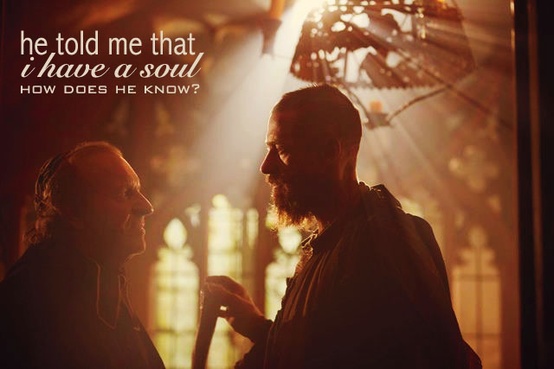
One of the best moments in the movie is in the first 20 minutes or so.  The Bishop of Digne is a minor character with a major impact on the story.  He offers Valjean food and shelter.  Desperate, this man out on parole sneaks off in the night with what silver of the church's he can carry.  When the cops find him trying to sell it, they drag him in front of the bishop, who smiles and says, 'Ah, Jean, you forgot these candlesticks, take them with you too!', and when the coppers are gone he tells him to use the candlesticks to make an honest life for himself.  Wow.  Now that's what I call grace!

This show of mercy precipitates Valjean's transformation - he uses the candlesticks to start a business and a new life ... except there's Javert, who cannot but pursue the man who to him will always be Prisoner 24601.  Javert.  The voice who reminds Valjean what he was and convince him that's what he still is.

Set in 1800's France, the social conditions in the film are not that far removed from the world we live in.  The more Dickensian issues in the show are things that happen all the time.  Since the French Revolution, and certainly since Victor Hugo wrote his novel, we haven't got rid of poverty, violence, crime, or any of the other social ills depicted (even TB is making a resurgence!).

Surely the church today has a responsibility to show the same transforming grace that the Bishop does to Valjean.  What a world we'd live in if we were that generous, that quick to forgive, and that willing to forgo our legal rights.

But sadly, we sometimes act too much like Javert, prioritizing law and order above grace and restoration.  Unwilling to let things go.  Determined that every act receive its due punishment (although, at least Javert is consistent and willing to be punished for his own errors).  He meets a sad demise, unable to live with the forgiveness and grace that he perceives as compromised standards.

The score is fantastic (can't get 'Bring Him Home' out of my head).  The singing is very impressive, if you ask me, filmed as it was live.  It's not recording standard, no, but there's something very vulnerable and genuine about the performances. 

But best of all, I find myself days later wanting to go back and think more about the stories within the story, and ask questions and talk about it with other people who've seen it.  Now I know why Les Miserables is such great fodder for sermon illustrations!


Monday, 24 December 2012

Christmas Reading: Stories, Not Lists

As I wind down coming up to Christmas, I like to read a solidly non-academic book that will not help me in any way to achieve study or work-related goals.  So, a few weeks ago I headed to the Oxfam Bookshop to choose such a read.  I was sort of hoping to get a second-hand copy of Mandela's 'Long Walk to Freedom' (we're going to South Africa in April) but the closest thing I could find was Ffyona Campbell's 'On Foot Through Africa'.

I remember the author being on TV in the early '90s, after her mammoth trek from Cape Town to Tangier.  She persevered through illness, attack and war zones to make sure she took every single step along the way, never taking a short cut even when it seemed justifiable to do so.

This adventure/travel book won't help me with work or study, so it meets the Advent and Christmas holiday reading criteria.  But even such carefully selected easy-on-the-brain literature can touch on spirituality.

"feel excitement about where you are,
not about where you will be."

Yesterday, on the train, I was struck by Campbell's words on page 144: "feel excitement about where you are, not about where you will be."

Very apt for the season of Advent!

The past 24 days have been like a long walk towards the exciting destination of Christmas.  I think it's really good that the church tells us to value waiting, preparing, journeying, and not just rush straight into Christmas. There are lots of voices telling us we can have it all now, instant gratification, instant cash, ... including (sadly I think) some voices within the church that we call prosperity teaching.

'On Foot Through Africa' is such a good read, precisely because it is far more than a list of successful arrivals in linear fashion across the map.  Campbell integrates experiences of suffering, defeat, sickness and fear.  She isn't scared to admit when she's the cause of her own troubles, her self-absorption or insensitivity to her fellow adventurers.

Integrating the hardships along the way turns her book from a list into a story.  And stories are way better than lists, if you ask me!

I think if our lives are all about the destinations, then we are like lists.  And lists are not the most exciting (or human) of documents.  Lives that are just lists of successes, are fragmented, indigested lives, sort of semi-fictional accounts selected carefully to project our best side in the hope of getting a job.

It's the long times in between successes that make our lives into stories.  The journey.  The long hours waiting, hoping, persevering.  That's what makes a good novel: connecting fibres, texture and depth, shade and light.

I like what Ffyona advises herself.  She won't make the journey, let alone enjoy it, if she can't choose to be excited about the now.

I have to learn to be patient along my path to finding out if I am to be trained for ordination or not.  It would feel great to be relieved of the wait, but the journey itself is good for me.  I dare say the same has been true during times of illness - I've learned more from suffering than from the cure (great as that is when at last it comes).

God's long, patient pedagogy can only be experienced fully if we learn to wait.  Advent is good for that.  And good for us.  It trains us for the hard bits of life we often want to pray away, fast-forward past to the end.
 
I've enjoyed my Advent reading, and letting an unlikely author speak to me about my faith journey.  Has the makings of a good New Year resolution ...
 
... but for now, I'm off to enjoy The Christmas Story.  Merry Christmas!