Showing posts with label Books and films. Show all posts

Wednesday, 12 June 2013

Library

The After Shot ... how long can I keep it this tidy?


Since finishing the Foundation Course with St. John's, I have been enjoying some more mindless tasks.  Sarah is enjoying having a husband who isn't too zonked reading theological tomes to wipe kitchen surfaces.

One domestic chore has stood out for me, though: coming up to two years in my current abode, I am sorting the study!

It's been a dumping ground for anything written or printed on paper that we don't immediately know what to do with.  As a consequence, I never studied in my study.

Over the years, I have acquired hundreds of books.  When we eventually move, I dread to think how we will take them all with us.  They take up more space than we really have available.

And as with any major household chore, the best start is to make a coffee, and sit down with a pen and paper.  The result: The Mac Bruithin Theological Library categorization system!

Obviously, there are more books in some categories and others are almost mono-tome, but I'm very pleased at how over the years all those books have formed a good overview of theology.  Now I just have to read them!  (And lend them - seeing all my lovely books made me feel very blessed and in need of sharing the wealth.)

I am considering going completely OCD and buying colour coded stickers for the spines. 

Interestingly (to me), it wasn't as easy as I expected to designate books 'theological' or 'not'.  Many are straight forward enough: 'The Atonement Debate'?  Theology.  'Essential Norn Irish'?  Not. 

Some are less straight forward.  'A Dollar a Day'?  'Making Poverty History'?  'Living in an Age of Absurdity'?  Anything by Michael Moore?

I suppose in real life, things aren't so easily labelled 'sacred' or 'secular'.  And when we try to divide the two, that's when the trouble starts.

When education, politics, economics, psychology, are considered 'secular' and beyond the remit of theological significance.

Actually, the Bible has a lot, an awful lot, to say about how our human life is to be celebrated and ordered, about poverty, philosophy, economics, leadership ... and not just cult and spirituality.

And if I only read theology and am ignorant about wider society and the realities we experience every day, how people are affected by globalization, by cuts to education and neo-liberal market policy, and the history of our country ... well, the theology might come across as a bit irrelevant.

So, I decided in my categorization system to be generous and open-minded in deciding what goes under 'theology'.  As an ordinand and hopefully one day as a priest, I hope to be the same in my approach to life in general!


1.    BIBLICAL STUDIES

1.1            Bible Overview & Reference
1.2            Exegesis
1.3            Hermeneutics
1.4            Biblical Languages
1.4.1                Hebrew
1.4.2                Greek
1.5            Bible Translations (English, Other Languages)
1.6            Old Testament
1.7            Intertestamental Studies & Second Temple Judaism
1.8            New Testament

2.    THEOLOGY AND BELIEF

2.1            Overview, Reference & Foundations
2.2            Groups, Denominations & Ideologies
2.3            Individuals
2.4            Periods of History
2.5            Theological Topics
2.5.1                Thinking about God
2.5.2                Christology
2.5.3                Pneumatology
2.5.4                The Trinity
2.5.5                Christian Cosmology and Anthropology
2.5.6                Providence & The Kingdom of God
2.5.7                Soteriology
2.5.8                Ecclesiology
2.5.9                The Last Things
2.6            Apologetics & World Faiths
2.7            Ethics
2.8            Philosophy of Religion
2.9            Other Philosophy


3.    MINISTRY

3.1          Practical Theology
3.2          Church
3.3          Ministry: Ordained, Leadership, Team
3.4          Preaching
3.5          Pastoral
3.6          Mission
3.7          Evangelism and Discipleship
3.8          Christian Living
3.9          Family
3.10             Christian Counselling
3.11             Social Justice
3.12             Faith & Politics

4.    SPIRITUALITY

4.1            Prayer
4.2            Church Year
4.3            Liturgy
4.4            Music
4.5            Mysticism and Monasticism
4.6            Other


5.    GENERAL REFERENCE

5.1            Dictionaries, Thesauri, etc
5.2            Writing
5.3            Research
5.4            Languages
5.5            Arts & Culture
5.6            Geography & Travel
5.7            History & Biography
5.8            Humour
5.9            Natural Science
5.10          Social Science
5.10.1             Psychology
5.10.2             Education
5.11             Management
5.12             Self-Care & Management


Tuesday, 22 January 2013

Prisoner 24601

Having never seen the show on stage, but heard bits of the story as sermon illustrations over the years, I was very excited to see Les Mis last Friday night.  Epic! (Spoiler alert!)

It spans Jean Valjean's life from his days as Prisoner 24601 to his death, all the while pursued by Javert.  It's like a (less preachy, more human) Pilgrim's Progress with its themes of grace over law, redemption, and the human condition.  Watching it felt at times overwhelming: a man sentenced to hard labour for stealing bread while bourgeois Parisians munch on macaroons and ride in plush carriages, young people in love whilst caught up in violent revolution, the terrifying domino effect of a single mother losing her job and the ensuing consequences as she tries desperately to survive, ...

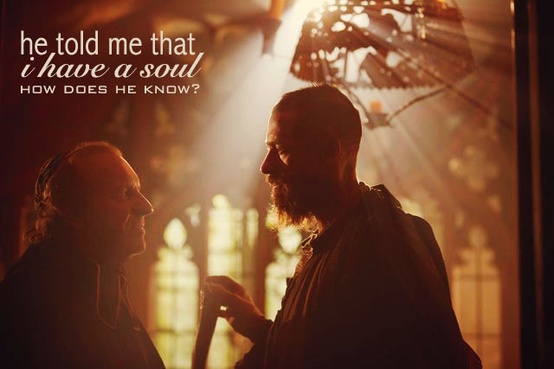
One of the best moments in the movie is in the first 20 minutes or so.  The Bishop of Digne is a minor character with a major impact on the story.  He offers Valjean food and shelter.  Desperate, this man out on parole sneaks off in the night with what silver of the church's he can carry.  When the cops find him trying to sell it, they drag him in front of the bishop, who smiles and says, 'Ah, Jean, you forgot these candlesticks, take them with you too!', and when the coppers are gone he tells him to use the candlesticks to make an honest life for himself.  Wow.  Now that's what I call grace!

This show of mercy precipitates Valjean's transformation - he uses the candlesticks to start a business and a new life ... except there's Javert, who cannot but pursue the man who to him will always be Prisoner 24601.  Javert.  The voice who reminds Valjean what he was and convince him that's what he still is.

Set in 1800's France, the social conditions in the film are not that far removed from the world we live in.  The more Dickensian issues in the show are things that happen all the time.  Since the French Revolution, and certainly since Victor Hugo wrote his novel, we haven't got rid of poverty, violence, crime, or any of the other social ills depicted (even TB is making a resurgence!).

Surely the church today has a responsibility to show the same transforming grace that the Bishop does to Valjean.  What a world we'd live in if we were that generous, that quick to forgive, and that willing to forgo our legal rights.

But sadly, we sometimes act too much like Javert, prioritizing law and order above grace and restoration.  Unwilling to let things go.  Determined that every act receive its due punishment (although, at least Javert is consistent and willing to be punished for his own errors).  He meets a sad demise, unable to live with the forgiveness and grace that he perceives as compromised standards.

The score is fantastic (can't get 'Bring Him Home' out of my head).  The singing is very impressive, if you ask me, filmed as it was live.  It's not recording standard, no, but there's something very vulnerable and genuine about the performances. 

But best of all, I find myself days later wanting to go back and think more about the stories within the story, and ask questions and talk about it with other people who've seen it.  Now I know why Les Miserables is such great fodder for sermon illustrations!


Monday, 24 December 2012

Christmas Reading: Stories, Not Lists

As I wind down coming up to Christmas, I like to read a solidly non-academic book that will not help me in any way to achieve study or work-related goals.  So, a few weeks ago I headed to the Oxfam Bookshop to choose such a read.  I was sort of hoping to get a second-hand copy of Mandela's 'Long Walk to Freedom' (we're going to South Africa in April) but the closest thing I could find was Ffyona Campbell's 'On Foot Through Africa'.

I remember the author being on TV in the early '90s, after her mammoth trek from Cape Town to Tangier.  She persevered through illness, attack and war zones to make sure she took every single step along the way, never taking a short cut even when it seemed justifiable to do so.

This adventure/travel book won't help me with work or study, so it meets the Advent and Christmas holiday reading criteria.  But even such carefully selected easy-on-the-brain literature can touch on spirituality.

"feel excitement about where you are,
not about where you will be."

Yesterday, on the train, I was struck by Campbell's words on page 144: "feel excitement about where you are, not about where you will be."

Very apt for the season of Advent!

The past 24 days have been like a long walk towards the exciting destination of Christmas.  I think it's really good that the church tells us to value waiting, preparing, journeying, and not just rush straight into Christmas. There are lots of voices telling us we can have it all now, instant gratification, instant cash, ... including (sadly I think) some voices within the church that we call prosperity teaching.

'On Foot Through Africa' is such a good read, precisely because it is far more than a list of successful arrivals in linear fashion across the map.  Campbell integrates experiences of suffering, defeat, sickness and fear.  She isn't scared to admit when she's the cause of her own troubles, her self-absorption or insensitivity to her fellow adventurers.

Integrating the hardships along the way turns her book from a list into a story.  And stories are way better than lists, if you ask me!

I think if our lives are all about the destinations, then we are like lists.  And lists are not the most exciting (or human) of documents.  Lives that are just lists of successes, are fragmented, indigested lives, sort of semi-fictional accounts selected carefully to project our best side in the hope of getting a job.

It's the long times in between successes that make our lives into stories.  The journey.  The long hours waiting, hoping, persevering.  That's what makes a good novel: connecting fibres, texture and depth, shade and light.

I like what Ffyona advises herself.  She won't make the journey, let alone enjoy it, if she can't choose to be excited about the now.

I have to learn to be patient along my path to finding out if I am to be trained for ordination or not.  It would feel great to be relieved of the wait, but the journey itself is good for me.  I dare say the same has been true during times of illness - I've learned more from suffering than from the cure (great as that is when at last it comes).

God's long, patient pedagogy can only be experienced fully if we learn to wait.  Advent is good for that.  And good for us.  It trains us for the hard bits of life we often want to pray away, fast-forward past to the end.
 
I've enjoyed my Advent reading, and letting an unlikely author speak to me about my faith journey.  Has the makings of a good New Year resolution ...
 
... but for now, I'm off to enjoy The Christmas Story.  Merry Christmas!