Showing posts with label Church. Show all posts

Wednesday, 26 September 2018

Church Welcome

I recently received a very warm welcome, and a disappointing one.  One was in a church, the other in a pub.  Guess which was which!

The disappointing one was in a place of worship (which I won't name).

A friend and I met to catch up.  And what do ministers do when they get together?  Well, we went to a cathedral hoping to sit quietly for a few minutes, talk about stuff and pray for one another.

But the entire worship space was blocked off by a series of partitions.  A young guy in a black coat told us we couldn't go any further without paying the entrance fee.

Really?  People can't just sit in a section  near the back, enjoy the quiet, lift a prayer book and get down on a kneeler?  We didn't want the run of the place, just two seats in a house of prayer.

Now I'm reasonably sure if we'd told this guy we're clergy in that denomination, we would've got in for free.  But 'Do you know who I am?' - nobody wants to be that guy.

I totally understand charging for tours and even self-guided visits to cathedrals that need the money to keep functioning.  And of course there should be a jar for 'offerings'.  But surely places of worship can let worshippers and seekers take a pew for a few minutes without buying a ticket?

Mainline churches complain that we can't attract people through the doors these days.  So, isn't it counter-productive to put off the curious by asking for money just to get past the door?

Cathedral worship is a significant growth area these days.  It appeals to post-moderns, whether for the sense of mystery or anonymity that big, dark, old buildings seem to foster.  Shouldn't we be encouraging drop-ins?

I mean, what is the church for in the first place?

We didn't pay.  We went to the pub instead.

Hanging outside a church in DC
We were greeted warmly, and shown seats.  OK so the drinks weren't free, but we found a space in the city centre where we could talk and pray. 

On holiday in the USA a while back, I was struck by the consistent strapline: 'The Episcopal Church welcomes you'.

Pretty much every Episcopal church, high or low, displayed the word 'welcome' somewhere prominent.  And most places allowed you to wander in, wander around, sit and pray.  Often, there was someone volunteering on the 'welcome desk' (not ticket desk), greeting people as they entered, encouraging visitors to take a walk around.

I liked the 'welcome' idea.  The displaying of signs in English and Spanish - not forbidding trespassing on private property or warning that CCTV is installed or reminding people not to make a mess.  No, telling the homeless when they could come to pick up a 'brown bag lunch', or just reassuring visitors that everyone is welcome for some time out with God, wherever they currently are in their journey.

For example, Saint Bart's on Fifth Avenue, NYC.  A homeless guy having a sleep on a back pew, beside a big, unambiguous sign reading 'Everyone needs a place'.

I like that.  Everyone needs a place.

We found one that day.  But sadly, not in the church.


Saturday, 19 January 2013

Renewing Vows

No, Sarah and I haven't renewed our marriage vows, but we recently renewed our baptismal vows!
 
I'm getting confirmed in March.  It might be a surprise to some people in our parish that I am in fact not confirmed yet.  So, last week I called the rector at Billy Parish Church to ask for a copy of my old baptism certificate. 
 
It was strange, if I'm honest.  Mainly because I don't remember being baptized as an infant!  And also because I had tended not to think about those formative but distant years as part of my Christian autobiography until more recently.

But on the Billy Parish website, some photos brought memories flooding back from thirty years ago, things I'd never have remembered without seeing pictures.


My dad is a painter and decorator, and as a little boy I spent many a summer's evening with him in the church building, staring at the stained glass, the dark wood and the furnishings, as well as out exploring the graveyard, all while he painted little gold daubs on the walls and varnished pews.
 
And you know, I think those childhood experiences were more significant than I ever realized.  I didn't understand much doctrine, and a lot of choices were made for me.  But these days I'm finding that theological propositions and individual choice aren't in fact the bedrocks of my faith that they used to be.
 
Now, isn't it funny how the liturgical year coincides with life events, including small ones, and where the two intersect there can be really meaningful experiences.  Just after the baptism cert arrived in the post last week, kindly sent with a calendar of Billy Parish, it happened to be the first Sunday after Epiphany when we remember Jesus' baptism.
 
At Christ Church, Rev. Katie had the font at the front, and she invited us all to renew our baptismal vows, promising faith in Christ and renouncing evil.  We went forward and held out our empty hands, just like at Holy Communion, and received a drop of water from the font.  Katie said the words:
 
           'Know that you are God's beloved,
            and He calls you to make a difference in the world.'
 
There's one thing I noticed that I want to bear in mind for whatever way I serve the church in the future.  Katie said the same words to each of maybe fifty people.  And she looked at each person and smiled, and said the words with complete sincerity, like at that moment each individual person had her full attention.  Every little sheep mattered as part of the flock.
 
This service caught me by surprise.  It made the arrival of my baptism certificate very meaningful.  I saw how, before I was able to make my own mind up, before I was in a position to write theology essays on the economy of grace, and sacraments and what they mean, before I could even speak or eat solid food or be without nappy - God created that little seed of faith in me and set me on the journey I'm still on today. 
 

Monday, 17 December 2012

Morning Walk

Between services at the Muff and St. Peter's churches yesterday, I enjoyed a bracing walk through a much underrated park in Derry, along the river from behind Sainsbury's to the steps under the Foyle Bridge.  I couldn't even tell you the name of it!
 
I don't often blog about walks (food, yes) but this one was spectacular.
 
The grass was crystalline with frost; the winter sun hung low and searching; the sky looked limitless, big, bright and blue.  Perfect morning's weather for a good old think.
 
So I thought.  And prayed.
The thing weighing most on my mind was a course mate who found out recently that she won't be sent to Dublin in the spring time to be considered for ordained ministry.  I don't know if she saw it coming, but I sure didn't.  I felt pretty floored by her news, so I can barely begin to imagine how she must be feeling.
 
Because even if we couch plans in very tentative terms, remembering to say all the if's and should's when we share our future dreams with other people, inside I think we can't help but become attached to those plans.  I know I have it all mapped out in my imagination.

What if I get bad news, too?  What if I get a 'no' and have to reconsider what I do with my life?  It'll be painful if the path I end up treading doesn't take me via the place I've imagined.
 
I'm doing a foundation course with a view to training for ordination in the Church of Ireland.  My bishop recently agreed to send me to a selection conference just before Easter.  I think I should hear either way within a couple of weeks of that.  I suppose I've kept it quiet because there's always the chance I could get a closed door at any stage, and realize I'm going no further in this direction.  And because I find it easier to share good news afterwards than risk making myself vulnerable!
 
Or to put it another way, it's easier to blog about chocolate fondants three years later when they work, than when they don't! (For obscure reference, see previous post!)
 
I think I'll be OK, eventually, if they say no.  Hugely disappointed, because as I continue to journey with others on a similar path, and as my course progresses, I realize I want it more and more.  But OK, because there are actually few things I want to do in a dog collar that I can't do without one.  Lay people can preach and teach, visit, pray, lead worship, train and equip others, ...  I would see it as a great privilege to say the prayer of consecration and declare people husband and wife, but these in themselves are not burning desires of mine.
 
So, I'm still figuring out why exactly I want to take this next step.  Release from paid employment to give more time to the church?  Indeed.  Chance to do an MTh?  Absolutely!  But neither of those quite justifies the drastic step of ordination!
 
If it is a 'no' next year, at least I'll know.  And I'll think of other ways I can satisfy my craving for theological study, and other ways of serving.
 
So, for now, I'll keep wrestling with that little voice.  The one that asks more questions than it answers.  How annoying!  But ultimately very, very satisfying.  "What are you called to do?  What about ordained ministry?  But then, why would you need to?  And why would you want to?  And if they turn you down, what then?"
 
More walks required on frosty, clear mornings ...


Wednesday, 21 November 2012

Women Bishops: They Think It's All Over ...

Sorry for the long absence.  I've had two essays to write, and I read far too much and it took weeks to get under control.

So, women bishops.  I won't lie to you, I was bitterly disappointed.  But we (if I can include myself as a CofI not CofE member) are not back at square one.  By the sound of some reporters and commentators, you'd think the church had just decided a woman's place is in the home.

First of all, the vote was lost only very, very narrowly, and it will most likely pass next time round.  Pity that's a few years off, but hey we have to work with the system we're in.

Secondly, in all three Houses (Bishops, Clergy and Laity) there was a strong majority in favour.  The Church is overwhelmingly pro-women bishops.  Support is strongest among the most senior figures in the Church, with both Archbishop Williams, Archbishop Sentamu and Archbishop-Elect Welby.

Thirdly (aren't I organized), the very fact that the CofE is talking about a change that is monumental in its history, speaks volumes about its willingness to change and learn.

Fourthly, isn't it great that the Church has the opportunity now to work even harder to get things right and bring opponents along with supporters?  If this were to be pushed through earlier than people are ready for it, then it might cause more conflict.  Bear in mind also that the arrangements for espiscopal oversight for people who can't accept a female bishop have to be got right.  If the wrong arrangements are made in order to get this through faster, we could end up with women as a lower tier of bishops.

Conflict and diversity of opinion are inevitable, and mature people and organizations can handle them.  So, hats off, Church of England, for talking it all through.  Critics are talking of a dead church, but as Sentamu said yesterday, dead bodies don't talk.

The same issues were around in Paul's time, and he knew that as a secondary issue (not meaning unimportant, but not fundamental to proclaiming Christ) different cultural allowances and checks might be necessary for the sake of unity, all the while maintaining his firm belief that:

              There is neither Jew nor Gentile, there is neither slave nor free man, there is neither
              male nor female; for you are all one in the Messiah, Jesus. (Gal. 3:8)

Sunday, 9 September 2012

Christian country? Litmus test


Ancient Israel was called to be different, an example of God's priorities, indeed God's character.
 
In the past few thousand years, have we learned the message of the Old Testament prophets?  There are two litmus tests for a godly nation.  One is commitment to God, not idols.  The second is social justice.  How does the UK stand up to litmus test two according to this week's news?
 
1.  Are we looking after the poor?  Save the Children this week starts a new campaign for children, not in Africa or South-East Asia, but in our own towns and cities.  This, in what's still one of the world's richest nations.  So yes, a charitable organization is looking after poor children here.  But how can there be poor children in a 'developed' country?  (Even if we object to the use of the word poor, as some have, it's certainly inequality.)
 
2.  Are we caring for the most vulnerable in society, e.g. the sick?  The sick are being told we can no longer afford to keep them.  A private company, ATOS, has the government contract to make the decision previously taken by family GPs - whether or not someone is too sick or infirm to work.  Increasingly, the weakest and most vulnerable in society are being told to earn their keep.  The mentally ill in particular are having their benefits taken off them, with ATOS assessors by their own admission under-trained in mental health.  They ask a seemingly innocuous question: Do you watch Coronation Street?  If you say you do, they conclude that your mind is clear and your concentration is good enough for a desk job.  If you're having cancer treatment and your appointment happens to be between cycles of therapy, you might just look well enough on that particular day to be told there's nothing stopping you from getting a job.  On appeal, a majority of decisions are overturned.  It seems ATOS, in order to reach targets, is hoping some won't have the fight in them to challenge their wrong decisions.


3.  Are we looking after immigrants?  No country can take in everyone who'd like to live there, or have completely open borders.  But nobody's asking the UK to.  Yet, desperate for votes and popular support, the UK coalition government has allowed the Border Agency to change and apply rules retroactively.  They don't answer questions, they make instructions deliberately ambiguous, and the government admit the agency is not fit for purpose.  Yet they are allowed to jeopardize the futures of overseas students who have paid tens of thousands of pounds in fees and poured their family's savings into the UK economy in living expenses.  Students just months away from graduating have been told, because their university London Met made mistakes (allegedly, although it's impossible not to since the Border Agency changes goalposts so often) they can't continue their studies, with immediate effect.  This is punitive, and directed at innocent victims.  Why not decide London Met can't take any more overseas students from now on, but allow current students to continue?  Because Cameron wants easy figures to wave at voters. 
 
We are told we can no longer afford our welfare system, yet there are more of us are paying into the system than in post-war Britain when the ravaged economy was struggling to get off the ground again.  For some, sadly, news of recession has been a great opportunity to forge more of a Darwinian survival-of-the-fittest society.
 
When I came back from Latin America in late 2009, and news of a credit crunch was everywhere, the conclusion was that greed and unregulated capitalism were the causes of the mess, not generosity and equality.  It took very little time for the powers that be to turn that message on its head, and convince us that we can't afford to care for the poor, the sick and the immigrants among us.


Thursday, 9 August 2012

Awl for one

See what I did there?  It's a funny Old Testament word.  I actually heard a pretty good sermon on awls once, so good I completely forgave the preacher for it having zero to do with the context of Deuteronomy.

Actually, now I mention it, this post isn't about awls specifically, not at all, to be honest.  But hey, got your attention!

I'm reading through Chris Wright's commentary on Deuteronomy.  Not my normal Thursday night shenanigans, it's mainly due to an essay deadline coming up.  But man alive, is Deuteronomy more fun than I expected it to be!

Basically, God has made his covenant with the people, and they have to decide if they want to sign up to the Ts & Cs.  And it's not all cloven hooved abominations and genocide - they feature, but the great Ulsterman of the Langham Trust (Wright) suggests there are bigger, more relevant things to focus on.

Israel has to decide what kind of community it wants to be, and what values define them.

Just like we have to decide what kind of society we want to be, as we readjust to the new economic realities of spending less money (individually as well as a country).

When we claim we can no longer afford to protect employees, and care properly for the poor and the sick, then what we are really saying is that we don't believe in the God of Deuteronomy who promises prosperity and long life in the land to those who follow his command to act justly and mercifully.

Deuteronomy has lots of great advice that I'd love our politicians to read ...

1.  God's ways work best.  Just because we read them in a very old book, like Deuteronomy, that doesn't make them irrelevant.  And God says we are to have no other gods before him, or (just as bad) alongside him.  So, we have to consciously choose NOT to worship 'The Market'.  We are not blessed by, provided for, protected by or created for 'The Market'. 

2.  Slash-and-burn is a bad policy.  Agriculture, business, everything has to be done sustainably.  We should let things lie fallow sometimes.  It's not necessary to squeeze every last bit out of our resources.  It'll still be there on Monday.

3.  There should be provision for the regular cancelling of debts.  If you're stupid enough to talk someone on a low income into an unnecessary loan, then you should accept that one day the debt may have to be written off.  People in debt should get regular breathing spaces. For set periods of time, red letters should stop coming in, interest should be capped, and the debt-stricken should be allowed to remember what life is like free of debt.

4.  The nation's resources should be equitably distributed, so everyone has a home, food and family life.  Not everybody can work, and not all work grows the financial budget.  But value does not lie in economic contribution.  All sorts of people are valuable in all sorts of ways, and we have to organize things so we can provide for them all.

5.  God guarantees that looking after the poor will not adversely affect a nation's economy.  To avoid huge national debts in the billions and trillions, look after your poor.  Don't turn on them after you've gotten the country into a huge mess. 

6.  We're one big community.  'The' poor, we say in English.  In Hebrew, it's 'our' poor, 'our' widows, orphans and immigrants.  We're responsible for them.  People in God's covenant are not to be out for themselves.

7.  Hard work where someone feels like they 'belong' to an employer should be strictly time-limited and followed by a chance for rest.  Hard work is good, and sometimes long, exhausting days are part of the job.  But that's no way for anyone to live long term.  It's crazy for some to be stressed at having too much to do, when so many are depressed at having no employment.

8.  Social justice isn't an optional extra for fuzzy liberals.  It's legislated on in God's law.  Provision must be made for the most vulnerable in society, in a corporate, organized way.

9.  It's OK to shut up shop for a day.  The world won't end.  If people need it, they know where we are (or if we're at the beach, they can find us tomorrow).

10.  At festival times, everyone should eat and drink and be merry and have their fill.  Nobody should be miserable or left out on their birthday, or at Christmas, or any other big community event.  Scraping by is not a human(e) way to live.  We all need a good party once in a while.

If Israel follows the covenant Ts & Cs, then there should be no poor.  Sounds like something our elected representatives ought to read and take inspiration from!

Budgets are moral documents, as Jim Wallis says, and we have to decide what kind of society we want to be.  Things are tough for us all, but it is never the time to cut services needed by the most vulnerable in society. 

I've taken these 10 points from Deuteronomy 15 and 16, with the help of Chris Wright's excellent commentary.  Bet you can find more!

http://www.amazon.co.uk/gp/product/0801048141/ref=s9_simh_gw_p14_d20_i1?pf_rd_m=A3P5ROKL5A1OLE&pf_rd_s=center-2&pf_rd_r=1G9EN96T6JD56T3HCJYM&pf_rd_t=101&pf_rd_p=317828027&pf_rd_i=468294


Thursday, 26 July 2012

It's only words

It's been a while since I posted.  Eugh yuck, I never wanted to say that.  I hate it when blog posts start like that.

The truth is, I've been busy with school.  No nine-week summer break for us English language teachers.  It's been a tough few weeks, with huge student numbers arriving for short courses, and a very thorough school inspection.

A typical introvert, when I am a bit overwhelmed by all the busy-ness, I tend to say less.  I find solace in the two things I enjoy that involve minimal listening, speaking, reading and writing: cooking and running.

I've experimented recently with a new sesame and brown rice salad, beetroot soup (mixed reviews) and a simple ricotta and spinach pasta sauce.  And I missed a few runs during the busiest week of all, but am back on my training schedule for the half marathon.

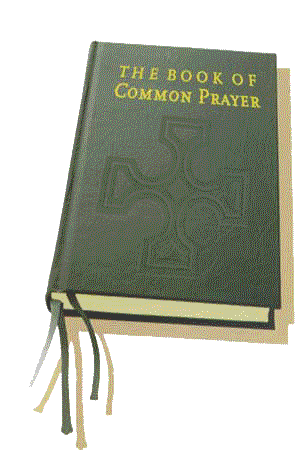
I've found recently that, whether in the pews or up front, it is a very soothing experience to have time set aside in the week for a church service.  And it reminded me of when I first came to Christ Church, much in need of some R&R time, and found it in a surprising place - a very surprising place for me - in the liturgy of the Book of Common Prayer.


I was not brought up to value written prayer.  It seemed such an oxymoron - written prayers?  Written prayers?

Now, I will never earn a crust with my looks or my athletic prowess.  Words are my tool.

When I came to Christ Church three years ago, as I say, I was looking for some rest.  I found myself empty of words, too tired to produce them, and too uninspired to look for them.

But someone else gave me the words to say, in the form of the prayer book.  And if I couldn't muster the will to say them, others did and it carried me along.

As the weeks passed, I waited for the boredom to set in - after all, why would anyone bother coming to church if they knew in advance half the words that would be uttered?  But I haven't got bored yet.  Probably because the words are really, really good.  Nobody says 'I love you' expecting the reply, 'Say something else, you say that same thing every day!'  Some words bear repetition.

Words can create, and transform, and shape. For good, but also for ill. And it's so easy to vomit them. They can be mass-produced and cheap, just as they can be charismatic, spontaneous yet inspired.

Our society values certain things: authenticity is one, a very good one.  Others include entertainment value, efficiency, and hyperpersonal choice.  Hmm.  Good or bad, good or bad ... probably 'open to abuse and probably unhelpful if applied uncritically'.

The BCP is not very strong on hyper-personal choice, because rubrics are reasonably fixed, although there is more flexibility built in than many of us realize.  Efficiency?  Hem.  And entertainment value?!  In a world that values entertainment, efficiency and extremely it-must-absolutely-fit-me-and-my-personal-preferences choice - (pause for breath) - you could almost say the prayer book is subversive!

But the prayer book is very valuable in that maverick leaders can only move so much within the structures.  The book ensures balance over personality.  Wise people with many years of personal and pastoral experience have reflected deeply to put together the rubrics and collect the texts.  They have taken great steps to ensure that we neither go down the route of worm theology ('I'm such a terrible, sinful disappointment to God, why did he ever make me?) nor the humanistic self-help pseudo-gospel ('10 Biblical steps to a better, smarter, fitter, new you in your marriage with lots of money').

Without the structures and guidelines of liturgy, it's so easy for words to bubble up and be out there, with little critical or theological sifting, doing what words do - creating, shaping, transforming.  Without liturgy, my feelings that day can dominate my theology.  Without liturgy, my misinformed ideas and agendas can slither into my prayers.  Without liturgy, we can do all the talking and very little listening to the Holy Spirit.  Our churches can easily be corrupted by some very un-christian values and assumptions. 

Ever heard phrases like 'Let's do business with God'?  I find that one particularly unhelpful.  I'd do better to let Him do the talking, and listen to His ideas.  I'd find myself in a weak negotiating position doing business with the Almighty.  The BCP understands that listening is as important as saying lots of words.

I've been quiet, blog-wise and other-wise, because I feel like it.  I've been too tired to be crafting words.  But maybe I could take advice from the proverb below, and let listening and more considered speech spill over into the next few months too ...

“The one who conceals hatred has lying lips, and whoever utters slander is a fool. When words are many, transgression is not lacking, but whoever restrains his lips is prudent. The tongue of the righteous is choice silver; the heart of the wicked is of little worth. The lips of the righteous feed many, but fools die for lack of sense.” (Proverbs 10:18-21, ESV).