Showing posts with label Mission and Spirituality. Show all posts

Sunday, 6 October 2013

Being Israel

For one million shekels*, answer the following question:

What does 'Israel' mean?

A.  He who believes in God
B.  He who conquers through God
C.  He who struggles with God
D.  He who is chosen by God

* Not really.


The answer is C - He who struggles with God.  Remember Jacob?  He meets God in a mysterious encounter, wrestles with him, and ends up limping off.  From then, he has this new name.  You can read it yourself in Genesis 32.

It's nice to have such a macho metaphor for life with God.  I think that will resonate with a lot of people.

Anyhoo, I think I limped off from college on Thursday.  I don't quite know what happened, but I felt suddenly overwhelmed by questions.  Big questions.  I'm not sure the answers I come too will be quite the ones I expect, or of I'm honest, hope for.  I got antsy, frustrated at hearing things I didn't want to agree with, but mainly at feeling completely unable to articulate any alternative.  

My thoughts were soupy, swirling and bitty, hard to pin anything down with a fork.  Scary.

Now, I'm not into wrestling as a sport.  But even I know, if you're wrestling with God, you will be overcome and have to surrender at some point.  And during those exhausting moments of wrestling, resisting, depleting energy, it also means we are in God's intimate embrace, his arms around us.

So I guess wrestling, struggling, is OK.  Limping off is OK.  Because it's good to be changed.  It actually feels good to go ten rounds with God and come off worse for wear, but having encountered Him.  Does that sound mental?

I actually think that's a better option than not wrestling, not struggling, never being challenged and knocked out of joint and changed.  It helps to know that it's all part of Being Israel.

So.  Back to Dublin later today for another round.  I thought a couple of years ago that I'd done my struggling and changing, emerging as some kind of post-evangelical.  Oh man ... it's starting to look like that was just a warm-up.


Monday, 1 July 2013

Sinai

A hermeneutic for church growth?
 
The Exodus narrative is rehearsed frequently in Hebrew liturgy, including Biblical text.  It is a key part of the controlling story, the bigger picture, of the Bible.  At key turns in Jewish history, the Exodus is recited, almost relived, as a defining event.  There's something deeply resonant, historically yet universally, about the Exodus.
 
For Christians, too, the liberation experienced by oppressed slaves, the road out of Egypt, has echoes of Divine salvation with wider implications than those mistreated Hebrews.
 
I have always found the bit starting in Exodus 2:23b very moving: "The Israelites groaned under their slavery, and cried out. Out of the slavery their cry for help rose up to God. 24 God heard their groaning, and God remembered his covenant with Abraham, Isaac, and Jacob. 25 God looked upon the Israelites, and God took notice of them."
 
Yet, the climax isn't rescue from slavery and peril.  The road travelled by escaping Hebrew slaves didn't go to the other side of Yam Suph, the Reed Sea, but just through it.  It went to Sinai.  The literary climax of Exodus isn't the action scene, parting the water for the Hebrews to pass safely.  Rather, it's the Covenant on Mount Sinai.  Another moving passage - the Hebrews are camped at Mount Sinai:

“Thus you shall say to the house of Jacob, and tell the people of Israel: 4 You yourselves have seen what I did to the Egyptians, and how I bore you on eagles' wings and brought you to myself. 5 Now therefore, if you will indeed obey my voice and keep my covenant, you shall be my treasured possession among all peoples, for all the earth is mine; 6 and you shall be to me a kingdom of priests and a holy nation."  (Ex. 19:3-6)
 
And it got me thinking about church growth, of all things ...
 
 
McGospel or Contextualized Gospel?
 
A big issue in church growth these days is whether we should try to meet people's needs at the risk of a diluted, or humanized, message, or stick to the 'pure gospel' and expect more from people.  On one side, we have the seeker-friendly, needs-meeting approaches like those of Saddleback and Willow Creek.  'But is the good news about spiritual massages and feel-good?' ask the critics.  On the other hand, we have advocates of a narrow church, where people know from the start what it means to set your hand to the plough, to be a sheep and not a goat.  Many are in aging congregations, feeling increasingly distant from the culture of the community outside.
 
The story of the Exodus has stuck in my mind recently in relation to this tension.  At our own juncture in place and sacred history, a post-Christian Ireland, recession-bitten, debt-laden Ireland.  Because as universally as Exodus resonates, it was an experience in this time-space continuum we call history.

God was concerned at the suffering of his people, their oppression, their cruel treatment, their tears.  And he acted to rescue them.
 
In his two-pronged redemption, God started by freeing slaves from forced labour, unnecessarily cruel treatment, targeted infanticide and dehumanized status.  How can the church not be in the business of caring for the suffering?  And there's plenty of it around us today. 
 
But that wasn't the telos of his salvation of the Hebrews, because he led them, not just to the other bank, but to Sinai where he entered into a covenant with the people.  Essentially, a relationship.
 
The word 'relationship' maybe doesn't carry quite the same weight as once it did - maybe when we talk about a 'relationship with God' it sounds a bit facebooky, transient, sentimental.  Maybe marriage is closer in meaning.  Something binding, permanent, solemn and very, very full of love and grace.
 
We can't ignore or be hardened to the plight of people around us.  That would be neither godly nor Christ-like.  But of course, we aren't social workers or therapists (except of course those  many Christians who are in fact social workers and therapists!).  We are witnesses to the fact that God desires to be in a covenant relationship with his people. 
 
Social action, mercy ministries, are essential hallmarks of the church, and ultimately expressions of God's character, God who Rescues.  They are not optional.  And they are not the end, either, but should lead people to Sinai, to covenant with God who Rescues.


Sinai Communities

Both opportunity and responsibility, people are in need of wholeness and the church must respond.  And we have to do more than fix problems and ills of society, we have to draw people into relationship with God.

Maybe we could design a new 'R&R' service, 'Rescue and Relationship' incorporating both strands?  (Think electronic music for the canticle 'Song of the Sea'!  That would be pretty cool!)

And/or start parallel 'Sinai' congregations in our parishes, perhaps in new housing estates, student halls or inner cities, wherever there are people in need of 'R&R'?

So, maybe my naïve ecclesiology is that churches are Sinai communities.  Groups of people who have this experience of rescue and relationship, tying both in some way to Jesus Christ.

And I think Exodus, this paradigmatic event in the Salvation Story of the Bible, can help those of us involved in growing church, in including more people in this Sinai experience.


Monday, 13 May 2013

Praying in South Africa

Our recent holiday was good for our prayer life.

We prayed for reconciliation and healing at St. George's Cathedral in Cape Town, with a multicultural, multilingual congregation, in the same sacred space where Archbishop Desmond Tutu decried the heresy of apartheid.

That was pretty special.

We prayed spontaneous doxologies when zebra, giraffes and elephant wandered across our path in Hluhluwe-iMfolozi, when we saw the stunning sunrise over King Shaka's old hunting ground, and when we reached the sun-bleached Cape of Good Hope where Atlantic and Indian Oceans meet.

And we prayed and prayed when we broke down by the side of a busy road!

Before our safari, we had a blow-out on the main road.  Lucky for Clare, Hannah and myself, Sarah is an expert tyre-changer.  In a mere 10 minutes, we were back on the road, making a detour to nearby Mtubatuba which from what we saw was a mainly Zulu town consisting of garages, fried chicken places and street kiosks.  It was Saturday mid-morning, and market day was winding down.

The garage owner smiled apologetically.  "It's a Chevy Spark.  We don't have a tyre that size.  Nowhere will.  We could have it here by Tuesday."

So, we took the risk of a two-day game drive on gravelly paths punctuated with regular potholes, praying the whole time that we'd be OK.  We did not want to get another flat in the middle of Mfolozi Reserve.  We could get eaten by lions!

On Sunday afternoon, having seen three of the 'Big Five' and lots more, we drove on to St. Lucia hoping to see hippos and crocs, but they were hiding.  So homeward we went ...

Until we sensed deja vu, the rasp of rubber on road, the unsteadiness of the metal encapsulating us, ... another blow-out.  And for no apparent reason, no nail, no glass, just a massive hole in the tyre.

And no spare.

Now, you don't want to hang around the side of a road in South Africa (nor anywhere else really). 

The breakdown people could tow us back into Mtubatuba, but everything was shut there, and we knew it would take a few days to get another tyre.  Clare called friends back in Durban, who called friends of friends closer to where we were, and soon we had an old Afrikaans couple with us.  He had brought a few spare tyres in assorted sizes in case one might do, but no such luck. 

Meanwhile, his wife rang around her friends and neighbours.  In earthy, guttural tones, she seemed to be asking, 'You know that young girl, lives above the liquor shop down the street from you, parks behind the garage, is it a Chevy Spark she ... oh.  A Micra.  Well, what about that man from ...'.

Sarah had a brain wave.  She decided to look for a Chevy Spark and flag it down and offer to buy their spare tyre.  Now it's not the commonest of cars, but within a few minutes there one came - no, it's a - yes, it's a - no, that's a - yes! yes! a Chevy Spark! STOP!!!

It drove on past.  A woman at the wheel, three daughters with her.  There was no way women would stop on a South African road when flagged down by strangers.

And then, our little miracle happened.  The Chevy slowed down and pulled over, turned around and approached us cautiously.  This woman must be crazy, we could be anybody!  We could do anything!  This was a country infamous for car-jacking and violent crime!  Yet, she stopped, yes she'd just had some new tyres put on, yes she had a spare.  She said she didn't want to exploit the situation, she'd take 200 rand - Clare knew it was worth at least 500, paid that, and gave her details in case the replacement was more.

In minutes, we were roadworthy again.

During all of this, we were praying like mad.  Not pretty, considered prayers either.  Prayers along the lines, Oh please please please God, get us home!  We don't want to spend three days in Mtubatuba!  Please don't let anything happen to us!  We're scared!

I think we realized, far from home, with no ATM close by, in a foreign country, knowing these highways were used by bandits and car-jackers, that we couldn't help ourselves.  We weren't self-sufficient, we needed help from up above.

Richard Foster's book 'Prayer' (does what it says on the tin) surveys many kinds of prayer: intercession, praise, praying during the long night of the soul ...  But he begins in chapter one with 'simple prayer'.  Immediate needs (and wants).  He says if we can't start with childlike prayer, we won't progress to more spiritually advanced prayer. 

Our experience in South Africa reminded us of our need for simple prayer.  And it's absolutely compatible with Christian faith, including mature faith: God concerns himself with our lives, including little details, and he acts providentially as a result.

Providence is a philosophical minefield, but we aren't asked to reconcile conflicting strands of logical dialectics; we're just asked to have faith in our Father who cares for us.  And, on the main Mtubatuba to St. Lucia Road in kwaZulu-Natal,  he certainly did.

Monday, 15 April 2013

Door Marked 'Yes'

So, for a few years now I've been wondering what to do next.  In my twenties, there seemed to be no limits - I could be a teacher, and a missionary, and be involved in politics, and write, and do a PhD, and and and and

but.  Then I was around the 30 mark, when we realize maybe every door opened means another several doors are closed.  Because we have finite time and energy.

And all the time there was this little voice niggling.  Train as a priest.  Or presbyter, pastor, whatever you want to call it.

'But I don't really know what ordination is for!'  I protested.  I can do all the things I enjoy without being ordained.

And ordained people have to kind of toe the church line - theologians can get away with more, they have more freedom to say what they want!

It's too hard, too expensive to go back to study, too big a commitment ...

My motives aren't completely clear.  I think I want to study theology full-time, I'm not sure it's entirely unselfish ...

There were a million reasons not to.  And yet here I am.  The Bishop has given the green light for me to train towards ordained ministry in the Church of Ireland.

It has been a long process.  First, I had to take the brave step of telling another human being - how do you tell someone you feel called to ordained ministry?  What if they laugh, what if they tell others?  What if they burst out, 'what you?!'.

Then there were the initial chats, with clergy and others, about motivation - why? why now? why me? why this?

And then the Foundation Course, the gist of a theology degree by distance learning over a year.  Church and Ministry; Biblical Studies; and perhaps scariest off all, Matrix of Christian Theology.  At some points I expected men in black coats (or indeed white coats) to offer me the red pill if I wanted out, to wake up and remember nothing.

And more recently, the Bishops' Selection Conference.  Two days at the beautiful Dromantine, where it really is pitch black when you switch the lights out, in the middle of rural County Down, with 16 other hopefuls, three bishops, and panels of other clergy and lay people.  Lots of personal questions and a few curve balls, and unhealthy consumption of coffee as we all waited to hear from others as they emerged from interviews.

Ordination is one of those things I don't think I'll ever understand.  It's enigmatic: as soon as you think you have it figured out, what it is and why, it eludes you again.  But after all these years, after all the recent study and discernment, man did I want it!

The process has been a great one.  By this point, if it had been a 'no' I'd have been gutted.  Which says a lot really.

Tuesday, 26 March 2013

Supper


Urgolino di Nerio, The Last Supper
 
I wonder have you been following Masterchef recently?  I have, fifty contenders, foodies from all walks of life, desperate to impress the judges with their culinary creations and become a chef.  Why, oh why, do they show it during Lent!?

If you, like me, like these kinds of programmes, then now’s a great time of year – Great British Menu (our own Ian Orr was robbed!), Paul Hollywood’s Bread if you prefer baking, and Come Dine With Me, my guilty pleasure, is never off the air ... you could say as a society we are obsessed with food – I know I am. 

It’s Holy Week, Jesus’ last week before he is crucified.  And he has just entered Jerusalem after a party at Lazarus, Mary and Martha's house in Bethany.  He’s spent some quality time with friends.  Now, it’s time to prepare for another Feast, Passover – the venue, the food, the wine, the guest list ...

Lots of stories about Jesus are loosely situated around food, but not in the obsessive cheffy way we drool over it today.  Jesus seemed to be where the food was – well he was fully human, wasn’t he! – in fact he had a bit of a reputation among the Pharisees for being a glutton and a party-goer.

But Nigella or Gordon Ramsay didn’t write the gospel accounts – (thank goodness, or there might be a lot of swearing!).  Imagine if they had – a duo of poisson Saint Pierre served with rustic stone-baked flatbreads – or as Matthew, Mark, Luke and John call it: five loaves and two fish!

No, the gospel writers skip over the details of the menu and concentrate on Jesus’ encounters with people.  In Bible times, it wasn’t about organic, or slow-cooked, fusion or authentic, medium-rare or with this sauce or that.  Food brought people together.  That’s why Jesus was always at parties and feasts – to be with people (I’m sure he enjoyed the food too).

Jesus spent a fair bit of his last week following the party at Lazarus’s house preparing for the Passover festival.  If we fast-forward to the Last Supper on the Thursday night, there Jesus is, the night he was betrayed, surrounded by main dishes, and side dishes and cups – and people. 

And who’s in the position of the honoured guest at supper?  It’s the very one who Jesus knows will betray him, Judas.  We can work it out from the gospel accounts, based on who was beside who, who spoke to who, and the fact that Judas was the first to sop, i.e. to dip his bread.

Why would Jesus have Judas near him, let alone in the place of guest of honour at the table?!

Why invite him, let him eat with him, in the first place?

Why show hospitality to a betrayer, one who would treat him so callously, and hand him over for 30 rotten pieces of silver?  Would that not turn your stomach?

We can probably all think of somebody who has wronged us, someone we would rather not eat with.  Someone – in our family, at work, in church even, that we would make a point of not sitting beside.  Of not engaging in conversation.  Someone that would not be on our guest list. 

Jesus in his last week before he is crucified, spends times eating and drinking with friends – and with his betrayer.  We don’t know the menu, it’s not that important really, but we know as Jesus served all his disciples, it was in a spirit of love, personal sacrifice and reconciliation, with a willingness to embrace even his betrayer.

I don’t know how Lent has been going for you.  I’ve not been completely successful at sticking to my Lenten vows, I get too tempted when I watch Masterchef to enjoy nice food and drink.  But there’s still time to prepare as we come to Easter. 

We might be buying lamb and some nice wine and lots and lots of chocolate.  And we need to prepare our hearts, too – that’s even more important!

We’ve all been wronged, and it can be so hard to follow Jesus’ example and love our enemies.  It’s far easier to avoid them and pretend we don’t have any enemies.

Who do I need to have a chat with over a cup of tea?  Who do I need to invite round for lunch, or go for a drink with and have an honest heart-to-heart? 

It’s easy to hate people we don’t sit with at a table.  It’s much, much harder when we invite our enemies to come and sit beside us.

Saturday, 16 March 2013

Habemus Papam Latinoamericanum*

Re-mapping the Church
* I don't know that this is a Latin word, I kind of made it up!

Who says 'north' goes at the top?
Wow, what a month for Latin America.  The Falklands referendum result isn't much of a surprise.  And it maybe shouldn't have, given his long battle with cancer, but Chavez's death has shocked not only his nation of Venezuela but a continent 'swept pink' (less red than Castro) by his  brand of Latin American socialism.  To whom will the presidents of Bolivia, Ecuador, Peru and Nicaragua look now?  But the big news is the first non-European Pope in a millennium  and the first ever from the Americas.

Sarah and I were glued to the TV news, excited to know if the next Bishop of Rome and leader of the world's 1.2 billion Roman Catholics might be Brazilian Cardinal Odilo Scherer.  Following the white smoke, commentators and pundits seemed sure it was Cardinal Scola, an Italian.  And then the announcement ... a moment to compute ... a Gaucho Pope!

Well, I think it's great news.  We'll have to wait and see what emerges about Pope Francis's alleged collusion with the military Junta of Buenos Aires in the 1970s and '80s.  It was indeed a Dirty War, one in which the Church's role is much disputed.

The new Pontiff's humility has been much vaunted in the media, and by the sounds of it with great reason.    He has already called for a 'poorer church'.  When elected as a cardinal, he requested that his compatriots not fly off to Rome but give the money to the poor.  A great user of public transport, he preferred to live in an apartment rather than an apostolic palace, and cook for himself or to eat in simple kitchens, including homeless shelters.  

(Since when did apostles have palaces, anyway?!)

Re-mapping global Christianity?
But for me, one of the greatest things about an Argentinian pope is the fairness of representation.  Democracy isn't really the word for church leadership choices, but surely when Latin America has over 40% of the world's RCs, and Europe has less than a quarter, with a clear majority of Catholics living in the Two Thirds World, a non-European pope is long overdue?

There has to be change in light of this global shift.  Europe has not been the heart of the Christian Church for a long time.  How long can structures remain unchanged, with so many Italian cardinals and so few from continents with growing, dynamic congregations?  (Obvious implications for the Anglican Communion, also!)

Catholic, Protestant or Dissenter, we have to move on.  The candlesticks have been moved around (Rev. 1-2), the growth of the church globally is creating new centres of gravity, new forces, new motion.  'We' (Europeans, WASPs, white middle-class males) cannot and should not represent the church in all its glorious technicolour.

We have to be open to learning from our sisters and brothers outside the West, in the Southern Hemisphere, their theological books will have to be translated into English and German from Spanish, Bembe, Tagalog.  We have to read scripture with fresh eyes, and ask for help to see around the Western, modernist lens we're blind to.  We need the humility to ask 'How is it our churches are shrinking and yours are growing?'  And, dare I say it, we need to get over this idea that somehow we know best and other cultures are lagging behind in their pre-modern values and ethics.  
So, wishing Pope Francis I all the very best, and with great optimism for his ministry, it is less the personality that excites me, and more the enormous precedent this sets for fuller participation of cultures other than Europe and North America in leading the Church of Christ.  Church of the 'poor', minister to us in the West!  We need you! 

Immanent

February came and went, and suddenly Selection Conference is 'this month' instead of 'next month'.  In fact, it's now just four days away.

I'll come clean.  Purge me with hyssop!  Instead of long prayer walks and half-day retreats and all the other spiritual plans to prepare for a very decisive two days, I've been really, really, reeeeeally busy at work.  And being distinctly below average at keeping lots of balls in the air at once, my preparations for Selection and my commitments to keep during Lent have gradually fallen by the wayside.  Note the length of time since I last posted on here.  That'll say something about my current spiritual resourcefulness!

Rather than lots of meditation and journalling in the lead-up to Selection, I've been doing lots of overtime at work, coming home mentally addled and just about able to cope with a DVD box set of House.  

Distinctly mundane.  Not how I envisioned Lent 2013 and the last few weeks of not knowing if I'll be training for ordained ministry or not.

Still, if you have to go into work early,
Derry's not a bad place to wake up to!
But it's real life, and it's a good job that Immanuel is God with us in real life, even when we are just chasing our tail and wearing ourselves out.  I had to go into work all bleary-eyed on the bus earlier in the week, on the silly-o'clock bus, to catch up before the day had started.  And there He was!  Looking after all the people represented by the lit-up windows, sustaining all the people waking up and getting ready for whatever the new day had in store.  Who'd have thought it, eh?  God on the FY3 bus.  Sitting beside me. 

There's something lovely about a town coming slowly alive before the morning rush hour.  A sense of newness, anticipation, everybody with their own little role to play in making community work and come together - selling, fixing, transporting, deciding, looking after, feeding, ... all the things we do, all the functions we carry out.

There's a sense of a plan, things working out, coming together, a sense that instead of chaos and individualism there's God behind it all, behind us all.

Selection Conference is imminent and I feel very under-prepared.  The busy spell ended yesterday, but I still haven't really got into that last essay, or read over my application form, or gone through the selection criteria to think about what I'll say in the interviews.

Psalm 139:9-10
If I rise on the wings of the dawn,
if I settle on the far side of the sea,
even there your hand will guide me,
your right hand will hold me fast.
So it's imminent, but God is immanent, not just distant and transcendent, but intimately involved in my little window like all the others.  I don't know how Wednesday and Thursday next week will go.  But I know that God's immanence is guaranteed, that He will be working through a 'no' as much as He will a 'yes', and he will be beside me always, whether that's writing theology essays or marking English essays, in a pulpit or on the FY3 to school. 

Saturday, 19 January 2013

Renewing Vows

No, Sarah and I haven't renewed our marriage vows, but we recently renewed our baptismal vows!
 
I'm getting confirmed in March.  It might be a surprise to some people in our parish that I am in fact not confirmed yet.  So, last week I called the rector at Billy Parish Church to ask for a copy of my old baptism certificate. 
 
It was strange, if I'm honest.  Mainly because I don't remember being baptized as an infant!  And also because I had tended not to think about those formative but distant years as part of my Christian autobiography until more recently.

But on the Billy Parish website, some photos brought memories flooding back from thirty years ago, things I'd never have remembered without seeing pictures.


My dad is a painter and decorator, and as a little boy I spent many a summer's evening with him in the church building, staring at the stained glass, the dark wood and the furnishings, as well as out exploring the graveyard, all while he painted little gold daubs on the walls and varnished pews.
 
And you know, I think those childhood experiences were more significant than I ever realized.  I didn't understand much doctrine, and a lot of choices were made for me.  But these days I'm finding that theological propositions and individual choice aren't in fact the bedrocks of my faith that they used to be.
 
Now, isn't it funny how the liturgical year coincides with life events, including small ones, and where the two intersect there can be really meaningful experiences.  Just after the baptism cert arrived in the post last week, kindly sent with a calendar of Billy Parish, it happened to be the first Sunday after Epiphany when we remember Jesus' baptism.
 
At Christ Church, Rev. Katie had the font at the front, and she invited us all to renew our baptismal vows, promising faith in Christ and renouncing evil.  We went forward and held out our empty hands, just like at Holy Communion, and received a drop of water from the font.  Katie said the words:
 
           'Know that you are God's beloved,
            and He calls you to make a difference in the world.'
 
There's one thing I noticed that I want to bear in mind for whatever way I serve the church in the future.  Katie said the same words to each of maybe fifty people.  And she looked at each person and smiled, and said the words with complete sincerity, like at that moment each individual person had her full attention.  Every little sheep mattered as part of the flock.
 
This service caught me by surprise.  It made the arrival of my baptism certificate very meaningful.  I saw how, before I was able to make my own mind up, before I was in a position to write theology essays on the economy of grace, and sacraments and what they mean, before I could even speak or eat solid food or be without nappy - God created that little seed of faith in me and set me on the journey I'm still on today. 
 

Monday, 17 December 2012

Morning Walk

Between services at the Muff and St. Peter's churches yesterday, I enjoyed a bracing walk through a much underrated park in Derry, along the river from behind Sainsbury's to the steps under the Foyle Bridge.  I couldn't even tell you the name of it!
 
I don't often blog about walks (food, yes) but this one was spectacular.
 
The grass was crystalline with frost; the winter sun hung low and searching; the sky looked limitless, big, bright and blue.  Perfect morning's weather for a good old think.
 
So I thought.  And prayed.
The thing weighing most on my mind was a course mate who found out recently that she won't be sent to Dublin in the spring time to be considered for ordained ministry.  I don't know if she saw it coming, but I sure didn't.  I felt pretty floored by her news, so I can barely begin to imagine how she must be feeling.
 
Because even if we couch plans in very tentative terms, remembering to say all the if's and should's when we share our future dreams with other people, inside I think we can't help but become attached to those plans.  I know I have it all mapped out in my imagination.

What if I get bad news, too?  What if I get a 'no' and have to reconsider what I do with my life?  It'll be painful if the path I end up treading doesn't take me via the place I've imagined.
 
I'm doing a foundation course with a view to training for ordination in the Church of Ireland.  My bishop recently agreed to send me to a selection conference just before Easter.  I think I should hear either way within a couple of weeks of that.  I suppose I've kept it quiet because there's always the chance I could get a closed door at any stage, and realize I'm going no further in this direction.  And because I find it easier to share good news afterwards than risk making myself vulnerable!
 
Or to put it another way, it's easier to blog about chocolate fondants three years later when they work, than when they don't! (For obscure reference, see previous post!)
 
I think I'll be OK, eventually, if they say no.  Hugely disappointed, because as I continue to journey with others on a similar path, and as my course progresses, I realize I want it more and more.  But OK, because there are actually few things I want to do in a dog collar that I can't do without one.  Lay people can preach and teach, visit, pray, lead worship, train and equip others, ...  I would see it as a great privilege to say the prayer of consecration and declare people husband and wife, but these in themselves are not burning desires of mine.
 
So, I'm still figuring out why exactly I want to take this next step.  Release from paid employment to give more time to the church?  Indeed.  Chance to do an MTh?  Absolutely!  But neither of those quite justifies the drastic step of ordination!
 
If it is a 'no' next year, at least I'll know.  And I'll think of other ways I can satisfy my craving for theological study, and other ways of serving.
 
So, for now, I'll keep wrestling with that little voice.  The one that asks more questions than it answers.  How annoying!  But ultimately very, very satisfying.  "What are you called to do?  What about ordained ministry?  But then, why would you need to?  And why would you want to?  And if they turn you down, what then?"
 
More walks required on frosty, clear mornings ...


Wednesday, 21 November 2012

Women Bishops: They Think It's All Over ...

Sorry for the long absence.  I've had two essays to write, and I read far too much and it took weeks to get under control.

So, women bishops.  I won't lie to you, I was bitterly disappointed.  But we (if I can include myself as a CofI not CofE member) are not back at square one.  By the sound of some reporters and commentators, you'd think the church had just decided a woman's place is in the home.

First of all, the vote was lost only very, very narrowly, and it will most likely pass next time round.  Pity that's a few years off, but hey we have to work with the system we're in.

Secondly, in all three Houses (Bishops, Clergy and Laity) there was a strong majority in favour.  The Church is overwhelmingly pro-women bishops.  Support is strongest among the most senior figures in the Church, with both Archbishop Williams, Archbishop Sentamu and Archbishop-Elect Welby.

Thirdly (aren't I organized), the very fact that the CofE is talking about a change that is monumental in its history, speaks volumes about its willingness to change and learn.

Fourthly, isn't it great that the Church has the opportunity now to work even harder to get things right and bring opponents along with supporters?  If this were to be pushed through earlier than people are ready for it, then it might cause more conflict.  Bear in mind also that the arrangements for espiscopal oversight for people who can't accept a female bishop have to be got right.  If the wrong arrangements are made in order to get this through faster, we could end up with women as a lower tier of bishops.

Conflict and diversity of opinion are inevitable, and mature people and organizations can handle them.  So, hats off, Church of England, for talking it all through.  Critics are talking of a dead church, but as Sentamu said yesterday, dead bodies don't talk.

The same issues were around in Paul's time, and he knew that as a secondary issue (not meaning unimportant, but not fundamental to proclaiming Christ) different cultural allowances and checks might be necessary for the sake of unity, all the while maintaining his firm belief that:

              There is neither Jew nor Gentile, there is neither slave nor free man, there is neither
              male nor female; for you are all one in the Messiah, Jesus. (Gal. 3:8)

Sunday, 9 September 2012

Christian country? Litmus test


Ancient Israel was called to be different, an example of God's priorities, indeed God's character.
 
In the past few thousand years, have we learned the message of the Old Testament prophets?  There are two litmus tests for a godly nation.  One is commitment to God, not idols.  The second is social justice.  How does the UK stand up to litmus test two according to this week's news?
 
1.  Are we looking after the poor?  Save the Children this week starts a new campaign for children, not in Africa or South-East Asia, but in our own towns and cities.  This, in what's still one of the world's richest nations.  So yes, a charitable organization is looking after poor children here.  But how can there be poor children in a 'developed' country?  (Even if we object to the use of the word poor, as some have, it's certainly inequality.)
 
2.  Are we caring for the most vulnerable in society, e.g. the sick?  The sick are being told we can no longer afford to keep them.  A private company, ATOS, has the government contract to make the decision previously taken by family GPs - whether or not someone is too sick or infirm to work.  Increasingly, the weakest and most vulnerable in society are being told to earn their keep.  The mentally ill in particular are having their benefits taken off them, with ATOS assessors by their own admission under-trained in mental health.  They ask a seemingly innocuous question: Do you watch Coronation Street?  If you say you do, they conclude that your mind is clear and your concentration is good enough for a desk job.  If you're having cancer treatment and your appointment happens to be between cycles of therapy, you might just look well enough on that particular day to be told there's nothing stopping you from getting a job.  On appeal, a majority of decisions are overturned.  It seems ATOS, in order to reach targets, is hoping some won't have the fight in them to challenge their wrong decisions.


3.  Are we looking after immigrants?  No country can take in everyone who'd like to live there, or have completely open borders.  But nobody's asking the UK to.  Yet, desperate for votes and popular support, the UK coalition government has allowed the Border Agency to change and apply rules retroactively.  They don't answer questions, they make instructions deliberately ambiguous, and the government admit the agency is not fit for purpose.  Yet they are allowed to jeopardize the futures of overseas students who have paid tens of thousands of pounds in fees and poured their family's savings into the UK economy in living expenses.  Students just months away from graduating have been told, because their university London Met made mistakes (allegedly, although it's impossible not to since the Border Agency changes goalposts so often) they can't continue their studies, with immediate effect.  This is punitive, and directed at innocent victims.  Why not decide London Met can't take any more overseas students from now on, but allow current students to continue?  Because Cameron wants easy figures to wave at voters. 
 
We are told we can no longer afford our welfare system, yet there are more of us are paying into the system than in post-war Britain when the ravaged economy was struggling to get off the ground again.  For some, sadly, news of recession has been a great opportunity to forge more of a Darwinian survival-of-the-fittest society.
 
When I came back from Latin America in late 2009, and news of a credit crunch was everywhere, the conclusion was that greed and unregulated capitalism were the causes of the mess, not generosity and equality.  It took very little time for the powers that be to turn that message on its head, and convince us that we can't afford to care for the poor, the sick and the immigrants among us.


Thursday, 9 August 2012

Awl for one

See what I did there?  It's a funny Old Testament word.  I actually heard a pretty good sermon on awls once, so good I completely forgave the preacher for it having zero to do with the context of Deuteronomy.

Actually, now I mention it, this post isn't about awls specifically, not at all, to be honest.  But hey, got your attention!

I'm reading through Chris Wright's commentary on Deuteronomy.  Not my normal Thursday night shenanigans, it's mainly due to an essay deadline coming up.  But man alive, is Deuteronomy more fun than I expected it to be!

Basically, God has made his covenant with the people, and they have to decide if they want to sign up to the Ts & Cs.  And it's not all cloven hooved abominations and genocide - they feature, but the great Ulsterman of the Langham Trust (Wright) suggests there are bigger, more relevant things to focus on.

Israel has to decide what kind of community it wants to be, and what values define them.

Just like we have to decide what kind of society we want to be, as we readjust to the new economic realities of spending less money (individually as well as a country).

When we claim we can no longer afford to protect employees, and care properly for the poor and the sick, then what we are really saying is that we don't believe in the God of Deuteronomy who promises prosperity and long life in the land to those who follow his command to act justly and mercifully.

Deuteronomy has lots of great advice that I'd love our politicians to read ...

1.  God's ways work best.  Just because we read them in a very old book, like Deuteronomy, that doesn't make them irrelevant.  And God says we are to have no other gods before him, or (just as bad) alongside him.  So, we have to consciously choose NOT to worship 'The Market'.  We are not blessed by, provided for, protected by or created for 'The Market'. 

2.  Slash-and-burn is a bad policy.  Agriculture, business, everything has to be done sustainably.  We should let things lie fallow sometimes.  It's not necessary to squeeze every last bit out of our resources.  It'll still be there on Monday.

3.  There should be provision for the regular cancelling of debts.  If you're stupid enough to talk someone on a low income into an unnecessary loan, then you should accept that one day the debt may have to be written off.  People in debt should get regular breathing spaces. For set periods of time, red letters should stop coming in, interest should be capped, and the debt-stricken should be allowed to remember what life is like free of debt.

4.  The nation's resources should be equitably distributed, so everyone has a home, food and family life.  Not everybody can work, and not all work grows the financial budget.  But value does not lie in economic contribution.  All sorts of people are valuable in all sorts of ways, and we have to organize things so we can provide for them all.

5.  God guarantees that looking after the poor will not adversely affect a nation's economy.  To avoid huge national debts in the billions and trillions, look after your poor.  Don't turn on them after you've gotten the country into a huge mess. 

6.  We're one big community.  'The' poor, we say in English.  In Hebrew, it's 'our' poor, 'our' widows, orphans and immigrants.  We're responsible for them.  People in God's covenant are not to be out for themselves.

7.  Hard work where someone feels like they 'belong' to an employer should be strictly time-limited and followed by a chance for rest.  Hard work is good, and sometimes long, exhausting days are part of the job.  But that's no way for anyone to live long term.  It's crazy for some to be stressed at having too much to do, when so many are depressed at having no employment.

8.  Social justice isn't an optional extra for fuzzy liberals.  It's legislated on in God's law.  Provision must be made for the most vulnerable in society, in a corporate, organized way.

9.  It's OK to shut up shop for a day.  The world won't end.  If people need it, they know where we are (or if we're at the beach, they can find us tomorrow).

10.  At festival times, everyone should eat and drink and be merry and have their fill.  Nobody should be miserable or left out on their birthday, or at Christmas, or any other big community event.  Scraping by is not a human(e) way to live.  We all need a good party once in a while.

If Israel follows the covenant Ts & Cs, then there should be no poor.  Sounds like something our elected representatives ought to read and take inspiration from!

Budgets are moral documents, as Jim Wallis says, and we have to decide what kind of society we want to be.  Things are tough for us all, but it is never the time to cut services needed by the most vulnerable in society. 

I've taken these 10 points from Deuteronomy 15 and 16, with the help of Chris Wright's excellent commentary.  Bet you can find more!

http://www.amazon.co.uk/gp/product/0801048141/ref=s9_simh_gw_p14_d20_i1?pf_rd_m=A3P5ROKL5A1OLE&pf_rd_s=center-2&pf_rd_r=1G9EN96T6JD56T3HCJYM&pf_rd_t=101&pf_rd_p=317828027&pf_rd_i=468294


Thursday, 26 July 2012

It's only words

It's been a while since I posted.  Eugh yuck, I never wanted to say that.  I hate it when blog posts start like that.

The truth is, I've been busy with school.  No nine-week summer break for us English language teachers.  It's been a tough few weeks, with huge student numbers arriving for short courses, and a very thorough school inspection.

A typical introvert, when I am a bit overwhelmed by all the busy-ness, I tend to say less.  I find solace in the two things I enjoy that involve minimal listening, speaking, reading and writing: cooking and running.

I've experimented recently with a new sesame and brown rice salad, beetroot soup (mixed reviews) and a simple ricotta and spinach pasta sauce.  And I missed a few runs during the busiest week of all, but am back on my training schedule for the half marathon.

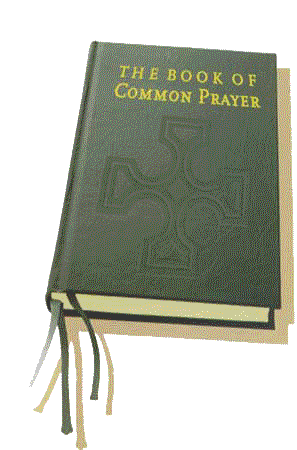
I've found recently that, whether in the pews or up front, it is a very soothing experience to have time set aside in the week for a church service.  And it reminded me of when I first came to Christ Church, much in need of some R&R time, and found it in a surprising place - a very surprising place for me - in the liturgy of the Book of Common Prayer.


I was not brought up to value written prayer.  It seemed such an oxymoron - written prayers?  Written prayers?

Now, I will never earn a crust with my looks or my athletic prowess.  Words are my tool.

When I came to Christ Church three years ago, as I say, I was looking for some rest.  I found myself empty of words, too tired to produce them, and too uninspired to look for them.

But someone else gave me the words to say, in the form of the prayer book.  And if I couldn't muster the will to say them, others did and it carried me along.

As the weeks passed, I waited for the boredom to set in - after all, why would anyone bother coming to church if they knew in advance half the words that would be uttered?  But I haven't got bored yet.  Probably because the words are really, really good.  Nobody says 'I love you' expecting the reply, 'Say something else, you say that same thing every day!'  Some words bear repetition.

Words can create, and transform, and shape. For good, but also for ill. And it's so easy to vomit them. They can be mass-produced and cheap, just as they can be charismatic, spontaneous yet inspired.

Our society values certain things: authenticity is one, a very good one.  Others include entertainment value, efficiency, and hyperpersonal choice.  Hmm.  Good or bad, good or bad ... probably 'open to abuse and probably unhelpful if applied uncritically'.

The BCP is not very strong on hyper-personal choice, because rubrics are reasonably fixed, although there is more flexibility built in than many of us realize.  Efficiency?  Hem.  And entertainment value?!  In a world that values entertainment, efficiency and extremely it-must-absolutely-fit-me-and-my-personal-preferences choice - (pause for breath) - you could almost say the prayer book is subversive!

But the prayer book is very valuable in that maverick leaders can only move so much within the structures.  The book ensures balance over personality.  Wise people with many years of personal and pastoral experience have reflected deeply to put together the rubrics and collect the texts.  They have taken great steps to ensure that we neither go down the route of worm theology ('I'm such a terrible, sinful disappointment to God, why did he ever make me?) nor the humanistic self-help pseudo-gospel ('10 Biblical steps to a better, smarter, fitter, new you in your marriage with lots of money').

Without the structures and guidelines of liturgy, it's so easy for words to bubble up and be out there, with little critical or theological sifting, doing what words do - creating, shaping, transforming.  Without liturgy, my feelings that day can dominate my theology.  Without liturgy, my misinformed ideas and agendas can slither into my prayers.  Without liturgy, we can do all the talking and very little listening to the Holy Spirit.  Our churches can easily be corrupted by some very un-christian values and assumptions. 

Ever heard phrases like 'Let's do business with God'?  I find that one particularly unhelpful.  I'd do better to let Him do the talking, and listen to His ideas.  I'd find myself in a weak negotiating position doing business with the Almighty.  The BCP understands that listening is as important as saying lots of words.

I've been quiet, blog-wise and other-wise, because I feel like it.  I've been too tired to be crafting words.  But maybe I could take advice from the proverb below, and let listening and more considered speech spill over into the next few months too ...

“The one who conceals hatred has lying lips, and whoever utters slander is a fool. When words are many, transgression is not lacking, but whoever restrains his lips is prudent. The tongue of the righteous is choice silver; the heart of the wicked is of little worth. The lips of the righteous feed many, but fools die for lack of sense.” (Proverbs 10:18-21, ESV).

Monday, 11 June 2012

Photo Album

Some thoughts on studying theology ... I remember the pre-digital age as a child on school trips to Edinburgh and York, with my beloved camera. I was so excited to be seeing new things and I wanted to remember them, so that old Canon 110ED instamatic was an important piece of equipment. And an expensive one. There was one roll of film to capture the essence of a five day trip. That meant 24 exposures – every click counted, and snap-happy people found that they had no film left for the last few days. The flash was bigger than the camera itself, a translucent plastic thing like an ice cube tray with individual little cells, maybe eight of them. It clicked into place on top of the camera itself, meaning eight indoor pictures might turn out visible. Each flash shot was accompanied by a sound like an ice cube breaking and the faint smell of smoke.

There was no panoramic function on the old camera, and sometimes there was a view that was worth two or even three photos. Say for instance Edinburgh Castle and that part of the Royal Mile and New College viewable from Prince’s Street. That was a big investment out of a 24 exposure film. At least it was outdoors, i.e. no flash required. So I’d photograph one side, then move the viewfinder to contain a landmark turret or spire as a shared landmark to make it easier to create a panoramic view later from two or three photos. My panoramic view was made by carefully overlapping prints and gluing them in place in a scrap book or photo album.

Other times, say from a height like the Castle Walls, there were beautiful and therefore photograph-worthy scenes below, but maybe not enough of a view to justify a prit-stick panorama job. So I might snap the view from one side and then another, taking in north and south, say, but ignoring the less exciting east and west.

I wonder if other school children employed these low-tech photographic solutions?!

I was thinking the other day how the Salvation Story of the Bible is a bit like leafing through a photo album. Often leafing through reminds us of important things in our past that we do well to remember, good times and bad. Albums, well constructed ones at least, tell a story, perhaps missing out lots of less remarkable days and emphasising significant milestones in our lives.

But it’s another similarity with photo albums that I pondered recently. It’s the way they are designed. We flick through. We might start looking in detail and then skip more superficially over a few until one catches our attention. Think about the way the mind works. We find a picture that stands out, or that chimes with us, and we look at it, start to drink it in. Probably, we look at the centre first, or the subject in the foreground, and then let our eye flit around the sides and the background as we place the subject in context.

In the written Word, there are lots of pictures. There is a surprisingly small amount of theological exposition. There’s lots of theology, but it’s mainly presented through stories and images, analogies and metaphors. St Paul develops theology in embryonic, logical texts, but even these are found in pastoral, practical letters addressed to young churches and particular leaders with problems to deal with and decisions to make. The Bible did not descend from heaven, and was not dictated word by word by an angel or disembodied voice. It was written by many people from varied backgrounds across centuries, all inspired to write through their grappling with faith, trying to make sense of their life experiences and open to the prompting of the Spirit to see the sacred in everyday life and events and to discern deeper, more eternal purposes. No wonder it isn’t an easy book!

Here lies a problem for us (I say problem, but I could equally say advantage). Different people notice different photos. Everybody has their own favourite. Sarah and I had a hard job choosing which of our wedding shots made the album, and relatives and friends who wanted copies for themselves all chose different ones. In the Christian community too, people are drawn to different pictures. Some like clear, practical shots, others like mystery and symbolism, more or less arty ones, real life or posed. Within Anglicanism, we have Catholics who like mystery and holiness, a sense of Otherness. We have Evangelicals who like clear, concrete answers (and others who like ambiguity!). There are liberals who just love portraits of people smiling. We have traditionals who like the picture to be composed just so. We have innovators who want something different. And we have lots of people who don’t easily fit into any of these caricatures! It’s part of the wonderful diversity of the church, in terms of theological perspectives, and probably temperament and personality as much as anything more doctrinal!

I think when we see the Bible as more of a technical user’s manual, we can get into trouble. When we force metaphors into procedural, literal boxes, we really get into trouble.

A clear example of analogy is the Church as the Body of Christ. The church is like a human body as far as it is made up of different parts that function in a coordinated way. It has a head that basically governs what the rest does. None of us get ourselves in a twist about the literal meaning of being a body. Maybe because ‘body’ has come to mean ‘organization’ or ‘team’ in addition to its basic meaning of torso, limbs and vital organs.

A much more debated metaphor is the legal view of Christ’s death that some call penal substitution. We were guilty, but we go free because Christ took our place. As a literal doctrine, this can be hard to understand for a number of reasons – legally, how can one person’s punishment be acceptable in lieu of the punishment of many individuals? What is the role of forgiveness if the wrath was simply unleashed on an innocent person? . But there it is, an image in our Album, this legal process, whether or not we call it ‘penal substitution’. It’s not for any of us to remove it.

So how do we handle it? We look at this image, let it confront us, let it change us. We try to make sense of it. All sorts of mental associations fire impulses from our own life experience, the court system of where we live, crime statistics on the news today, our feelings about mercy versus justice, a time when we got the rap for something someone else did. All the sermons we heard preached on the topic. It’s hard to drown out all those associations when we look at the image as framed in Scripture.

In our desire to make more sense of penal substitution, we look around the subject for clues. How does this fit into the bigger picture?

We might be tempted to ‘fill in the gaps’ and speculate what doctrine knits this into a whole systematic theology. I think there’s a lot of speculative theology about the harder doctrines – predestination, say, or the chronology of end times. We spend a lot of energy arguing about it, too.

Anyway, back to this difficult photo. Penal substitution (at least, that’s the caption some write underneath it). On the same page, there are related images: ransom, redemption, atonement, re-birth and renewal. Another temptation might be to take the closest other image and to overlap them, push them together, and glue them in place. But they don’t quite match up. There are lots of these bumpy bits in systematic theology. There are lovely smooth lines of thought, and then bump – we have a problem.

(Anglicans tend to be above average for tolerating the bumpy bits and the gaps!)

Translating these images to text, a scientific copywriter would approach it in a very different way to a poet. I would suggest that images – analogies, metaphors – in the Canon of Scripture are more like poetry than physical, five-sense descriptions. Saying that x is y, or calling Jesus a shepherd, or explaining the cross as penal substitution, these are ways of understanding eternal realities using cues from lived experiences on earth.

I am not advocating a platonic understanding here, claiming that a table on earth is just an attempt at making the great, ultimate table out there in the spiritual realm. It always struck me as a bit of a random philosophy. But I am suggesting that much theology is based on images rooted in the created world, while the truth behind them is much, much more ancient, from before creation. But how can humans understand except in language and images we can relate to?

Let’s take an example. God is our Father. If we take Father as a metaphor, we understand that there are aspects of ‘making’ us and giving us life, sustaining and caring for us, being wise and leading us. Over the millennia, and from one culture to another, the exact idea changes but basically we get the idea.

Unless – we project onto God our own ideas based on taking the metaphor too far. Say, ‘God is male because he is Father, not Mother’ or the dangerous idea that a father can invoke God’s right to judge and punish in whatever way he sees fit, confusing rage and frustration with God’s holy anger. For far too many people, God as Father is not an immediately comforting thought.

Thematic photography, you might call it. Bible analogies are ANALOGIES. Not saying one thing is another, but one thing is like another in some ways. Anthropomorphic language, especially male-centric language, has to be understood as it is – analogy. Father doesn’t mean God is male. Penal substitution can’t become doctrine beyond what writers wanted to draw as analogies with secular law. Every analogy breaks down at some point.

There is plenty of diversity within God’s collection of images of his Salvation Story. Different lenses, techniques, styles and genres. No surprise there – he created diversity, he loves it. We needn’t worry that he sometimes zooms in on one nation and at other times pans out to take in the panorama. That he shows us pictures of the same thing seen from another angle. Some people will be drawn to prophetic images, others to practical advice, others still to stories of miracles or songs or even scary apocalyptic stuff about giant locusts firing from their tails.

A cell can be dissected and understood accurately in terms of its structure, its functions and processes. But as soon as it is dissected, it dies. Art too – words, images – can be dissected and understood, but at a cost. Understanding the images in the Bible is important; our brains are a gift from God as much as our hearts, souls and every other bit. But doctrine is not the ultimate aim. The eternal purpose is the worship of God, and for us union with the Holy Trinity in the Reign of God on earth as in heaven.

Here’s the way I see it ...

In the beginning: God.

At some point in eternity, God made space and time.

At some point in space-time, creation reached its pinnacle and God made humans as sentient beings, in his own image.

Things went wrong at the Fall and humans messed up the relationships with God and each other.

God started a long, slow, patient pedagogy, reaching into our encultured lives in ways that we would understand, all in order to bring us back to him and make things good again, like it was supposed to be in the first place.

In communicating with us, he used images that are anthropologically quite universal, such as father, fire, wind, rest. And he used images that are quite culture-bound like shepherds, bread, tents and wine. These images are placed in a Great Narrative, the Salvation History of the Bible.

Images help us on our way. Our response to these God-revealed pictures should be to fall down and worship. Understanding may come, even fleetingly, questions may be answered. But confronted with Great Salvation Story, we fall to our knees in grateful worship.

I hope as I continue to study that I can keep admiring the wonderful images in the Scriptures, enjoying them and being transformed by them, and not get too distracted by the bumpy bits where we add two and two and make fifteen, and the rough sketchy bits we've added because we're scared by the blanks.