Thursday, 16 August 2012

Number 46

So, my application to enter the Derry Waterside Half Marathon has finally been processed.  My runner's number is 46.  I feel now like it's time to talk about this.  And by doing so, I am committing myself to actually going through with it!

My fancy new trainers, a kind birthday presie from my in-laws

I decided back in February that if I don't get into shape this year, then it's only going to get harder.  And by chance, I came across a series of NHS podcasts called Couch to 5K.  In just nine weeks they took me from gentle one-minute runs interspersed with recovery walks, to running a solid 5K in 30 minutes.  To see the beginner's programme, go to http://www.nhs.uk/LiveWell/c25k.  They recently added a series of three improver level podcasts.

It's a great way to see the great outdoors (even the wilder nooks of Kilfennan Urban Park!).  When I've been away in Dublin on my course and visiting Sarah's family in Berkshire, I've enjoyed getting the runners on and seeing new places.  This weekend we're off to Switzerland for a wedding, and I'm looking forward to planning a route around Wolfhausen on www.mapmyrun.co.uk. 

I never take a mobile on my runs - so please don't mug me.  It's so wonderfully self-indulgent to be uncontactable and just be with my thoughts for three hours.  Ha ha just kidding. I can't run for three hours.

Now, for the past couple of months I've been training for a half marathon and so far so good.  I'm not too worried about how long it takes me to get round, I just want to finish it (and ideally not come last).

I'm running to raise money for Latin Link, who I worked with in Bolivia.  We're all suckers for pictures of cute little children, and rightly so.  But when young people in orphanages and social care projects turn 18, there often isn't anything for them to go to for support.

Tunari Treasures is a project that our friends Gray and Andrea started to support unemployed young men.  They are taken in, mentored, trained and employed as metal workers.  It's a brilliant project, providing the guys with life skills as well as a viable means of income.

Half the money raised will go to Tunari Treasures, and the other half to help with running costs in the Britain and Ireland office of Latin Link.  Running costs don't sound just as exciting as the fantastic things they do in South and Central America, but without the office in Reading, the Irish and British members can't do their work.  (Latin Link have a brilliant website with lots on what they do, www.latinlink.org.)

"How do I sponsor you?"  I hear you cry!  Easy.  Just go to http://uk.virginmoneygiving.com/ChrisMacBruithin for a fast, safe way to donate.  If you pay tax in the UK, tick the Gift Aid box to increase your donation courtesy of Her Majesty's Inland Revenue.

If you can make a contribution, thank you!  And if I mention in three weeks' time that I think I've picked up an injury and might not be able to run, please tell me to wind my neck in and get myself around those 21.1 km!

Thursday, 9 August 2012

Awl for one

See what I did there?  It's a funny Old Testament word.  I actually heard a pretty good sermon on awls once, so good I completely forgave the preacher for it having zero to do with the context of Deuteronomy.

Actually, now I mention it, this post isn't about awls specifically, not at all, to be honest.  But hey, got your attention!

I'm reading through Chris Wright's commentary on Deuteronomy.  Not my normal Thursday night shenanigans, it's mainly due to an essay deadline coming up.  But man alive, is Deuteronomy more fun than I expected it to be!

Basically, God has made his covenant with the people, and they have to decide if they want to sign up to the Ts & Cs.  And it's not all cloven hooved abominations and genocide - they feature, but the great Ulsterman of the Langham Trust (Wright) suggests there are bigger, more relevant things to focus on.

Israel has to decide what kind of community it wants to be, and what values define them.

Just like we have to decide what kind of society we want to be, as we readjust to the new economic realities of spending less money (individually as well as a country).

When we claim we can no longer afford to protect employees, and care properly for the poor and the sick, then what we are really saying is that we don't believe in the God of Deuteronomy who promises prosperity and long life in the land to those who follow his command to act justly and mercifully.

Deuteronomy has lots of great advice that I'd love our politicians to read ...

1.  God's ways work best.  Just because we read them in a very old book, like Deuteronomy, that doesn't make them irrelevant.  And God says we are to have no other gods before him, or (just as bad) alongside him.  So, we have to consciously choose NOT to worship 'The Market'.  We are not blessed by, provided for, protected by or created for 'The Market'. 

2.  Slash-and-burn is a bad policy.  Agriculture, business, everything has to be done sustainably.  We should let things lie fallow sometimes.  It's not necessary to squeeze every last bit out of our resources.  It'll still be there on Monday.

3.  There should be provision for the regular cancelling of debts.  If you're stupid enough to talk someone on a low income into an unnecessary loan, then you should accept that one day the debt may have to be written off.  People in debt should get regular breathing spaces. For set periods of time, red letters should stop coming in, interest should be capped, and the debt-stricken should be allowed to remember what life is like free of debt.

4.  The nation's resources should be equitably distributed, so everyone has a home, food and family life.  Not everybody can work, and not all work grows the financial budget.  But value does not lie in economic contribution.  All sorts of people are valuable in all sorts of ways, and we have to organize things so we can provide for them all.

5.  God guarantees that looking after the poor will not adversely affect a nation's economy.  To avoid huge national debts in the billions and trillions, look after your poor.  Don't turn on them after you've gotten the country into a huge mess. 

6.  We're one big community.  'The' poor, we say in English.  In Hebrew, it's 'our' poor, 'our' widows, orphans and immigrants.  We're responsible for them.  People in God's covenant are not to be out for themselves.

7.  Hard work where someone feels like they 'belong' to an employer should be strictly time-limited and followed by a chance for rest.  Hard work is good, and sometimes long, exhausting days are part of the job.  But that's no way for anyone to live long term.  It's crazy for some to be stressed at having too much to do, when so many are depressed at having no employment.

8.  Social justice isn't an optional extra for fuzzy liberals.  It's legislated on in God's law.  Provision must be made for the most vulnerable in society, in a corporate, organized way.

9.  It's OK to shut up shop for a day.  The world won't end.  If people need it, they know where we are (or if we're at the beach, they can find us tomorrow).

10.  At festival times, everyone should eat and drink and be merry and have their fill.  Nobody should be miserable or left out on their birthday, or at Christmas, or any other big community event.  Scraping by is not a human(e) way to live.  We all need a good party once in a while.

If Israel follows the covenant Ts & Cs, then there should be no poor.  Sounds like something our elected representatives ought to read and take inspiration from!

Budgets are moral documents, as Jim Wallis says, and we have to decide what kind of society we want to be.  Things are tough for us all, but it is never the time to cut services needed by the most vulnerable in society. 

I've taken these 10 points from Deuteronomy 15 and 16, with the help of Chris Wright's excellent commentary.  Bet you can find more!

http://www.amazon.co.uk/gp/product/0801048141/ref=s9_simh_gw_p14_d20_i1?pf_rd_m=A3P5ROKL5A1OLE&pf_rd_s=center-2&pf_rd_r=1G9EN96T6JD56T3HCJYM&pf_rd_t=101&pf_rd_p=317828027&pf_rd_i=468294


Friday, 3 August 2012

Broadens the mind?

'Oxford graduates, who would not be remotely interested in getting to know British working-class people on council estates, find it uplifting to go sightseeing among the poor of the Third World.'  (Jack Shamash, Mindless in Gaza, (C) The Guardian)


I actually taught today.  I covered another teacher, and pulled an old lesson off the shelf ready to go, one of those old stand-alone photocopy-in-case-of-emergency ones.

We read an old article from the Guardian, 'Mindless in Gaza' by Jack Shamash.

Shamash disparagingly does violence to the belief that 'travel' is a romantic, lofty, noble pursuit, far superior to tourism.  I suppose it made me squirm as I remembered the times I've said smugly 'I've never been, nor will I ever be, on a package holiday'.  (Which is actually not even true, because I paid an all-in price for a tour of the Holy Land in 2000).

I first taught this lesson in 2005, and it is one of the few articles I could instantly name as a text that has changed my attitude to something.  Shamash argues that travel in fact narrows the mind.

It's meant to be provocative, and it is.  Comfy old views are poked and jibed for a reaction.  Clever examples are selected as supporting evidence: days chewed up looking for the cheapest hostel, tedious pontification by the  travel-wise about how to haggle prices right down, uncomfortable journeys alongside people who are obviously in constant motion because they're avoiding real life back home ...  Huh.  At least tourists are honest about their motives, and are probably much less self-aggrandizing, argues Shamash.

One example left me pondering during the first flush of my teaching career, and still has me perplexed.  Look back at the quote above, the paradox that noble Travellers experience poverty a thousand miles away but ignore grim reality a mile and a half down the road.

'I just had to get out there and see the poverty for myself.'  Heard (or said) that before?

Why?

We see it on TV.  Isn't that enough?  Do we have to smell poverty as well?

Do we confuse 'poor' with 'cosy, simple and rustic', thinking we're going to experience the Good Life?  'They're poor, but oh so happy' - that's what the national romantic artists depicted and it made the establishment all the more secure that people have their allotted place in life and shouldn't move beyond their station.

Is it neo-colonialism?  A saviour complex?  A chance to live like royalty with tiny prices, and a feeling that all my shopping for textiles and trinkets is 'making a difference'?  (Disparaging?  Eat your heart out, Jack Shamash!)

I don't know what the answer is, but feel free to comment!  (Seriously, please comment!)

Sarah and I have both gone on short term mission trips, mainly to Latin America.  There's no doubt that the experiences have marked us, and our connections with the communities we stayed with are an important part of our marriage.  Bolivia, in particular, will always be part of us.

Why did we go?  I don't have a big catch-all reason.  Maybe I thought when I was 21 that I could save the world, but when I returned aged 30 I definitely didn't think that any more.  In fact, I went wondering what on earth little I could possibly do.

I suppose I half-expected 'poor' Latin America to be 'poor but happy', which is largely true, but of course that's no reason for it to remain economically disadvantaged.  And I was as seduced as the next gringo at enjoying the sudden rush of affluence when I exchanged pounds for pesos.

It's not that hard these days to go to other continents and see the poor.  It's much harder, I suppose, to come back home a changed person and especially to remain a changed person, having seen poverty first hand.  For myself, returning to Ireland was definitely Plan B.  But here's the challenge ...

... to be prophets in our own homes.

How often has the same passion to see poverty (and implicitly, I hope, challenge it), ever moved me to take a walk around deprived streets in my own town?  It seems easier to be a socialist on Che's own patch, and more attractive to be a missionary in sunnier climes.

There's poverty here too. Economically, of course, and socially too. We're much poorer here than in Latin America in lots of ways.

We come home, the tan fades (in my case, the sunburn peels).  Hopefully, though, other changes might last.

If you went on a mission trip or gap year, it would be great to hear your comments on why you went, what you did and how it affected you.

'Fra Hardanger', by Gude.  An example of a beautiful national romantic painting that, wittingly or not, expresses how happy the simple, rural poor are when they remain at their station in life.

More from Jack Shamash at www.jackshamash.com

Want to read more?  http://books.google.co.uk/books?id=U0uTvmEcbSEC&pg=PA78&lpg=PA78&dq=jack+shamash+mindless+in+gaza&source=bl&ots=G9io1PBaVB&sig=FRZz67HsCrPbciHRaGkbskweCQ8&hl=en&sa=X&ei=QeQbUJCdFYKe0QWAzYHYCA&ved=0CE0Q6AEwAA#v=onepage&q=jack%20shamash%20mindless%20in%20gaza&f=false

Thursday, 26 July 2012

It's only words

It's been a while since I posted.  Eugh yuck, I never wanted to say that.  I hate it when blog posts start like that.

The truth is, I've been busy with school.  No nine-week summer break for us English language teachers.  It's been a tough few weeks, with huge student numbers arriving for short courses, and a very thorough school inspection.

A typical introvert, when I am a bit overwhelmed by all the busy-ness, I tend to say less.  I find solace in the two things I enjoy that involve minimal listening, speaking, reading and writing: cooking and running.

I've experimented recently with a new sesame and brown rice salad, beetroot soup (mixed reviews) and a simple ricotta and spinach pasta sauce.  And I missed a few runs during the busiest week of all, but am back on my training schedule for the half marathon.

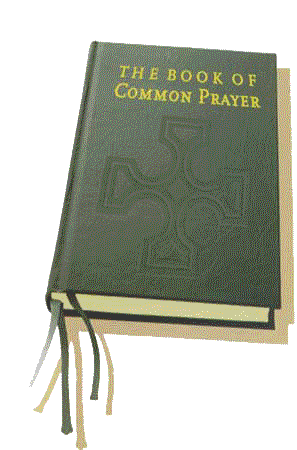
I've found recently that, whether in the pews or up front, it is a very soothing experience to have time set aside in the week for a church service.  And it reminded me of when I first came to Christ Church, much in need of some R&R time, and found it in a surprising place - a very surprising place for me - in the liturgy of the Book of Common Prayer.


I was not brought up to value written prayer.  It seemed such an oxymoron - written prayers?  Written prayers?

Now, I will never earn a crust with my looks or my athletic prowess.  Words are my tool.

When I came to Christ Church three years ago, as I say, I was looking for some rest.  I found myself empty of words, too tired to produce them, and too uninspired to look for them.

But someone else gave me the words to say, in the form of the prayer book.  And if I couldn't muster the will to say them, others did and it carried me along.

As the weeks passed, I waited for the boredom to set in - after all, why would anyone bother coming to church if they knew in advance half the words that would be uttered?  But I haven't got bored yet.  Probably because the words are really, really good.  Nobody says 'I love you' expecting the reply, 'Say something else, you say that same thing every day!'  Some words bear repetition.

Words can create, and transform, and shape. For good, but also for ill. And it's so easy to vomit them. They can be mass-produced and cheap, just as they can be charismatic, spontaneous yet inspired.

Our society values certain things: authenticity is one, a very good one.  Others include entertainment value, efficiency, and hyperpersonal choice.  Hmm.  Good or bad, good or bad ... probably 'open to abuse and probably unhelpful if applied uncritically'.

The BCP is not very strong on hyper-personal choice, because rubrics are reasonably fixed, although there is more flexibility built in than many of us realize.  Efficiency?  Hem.  And entertainment value?!  In a world that values entertainment, efficiency and extremely it-must-absolutely-fit-me-and-my-personal-preferences choice - (pause for breath) - you could almost say the prayer book is subversive!

But the prayer book is very valuable in that maverick leaders can only move so much within the structures.  The book ensures balance over personality.  Wise people with many years of personal and pastoral experience have reflected deeply to put together the rubrics and collect the texts.  They have taken great steps to ensure that we neither go down the route of worm theology ('I'm such a terrible, sinful disappointment to God, why did he ever make me?) nor the humanistic self-help pseudo-gospel ('10 Biblical steps to a better, smarter, fitter, new you in your marriage with lots of money').

Without the structures and guidelines of liturgy, it's so easy for words to bubble up and be out there, with little critical or theological sifting, doing what words do - creating, shaping, transforming.  Without liturgy, my feelings that day can dominate my theology.  Without liturgy, my misinformed ideas and agendas can slither into my prayers.  Without liturgy, we can do all the talking and very little listening to the Holy Spirit.  Our churches can easily be corrupted by some very un-christian values and assumptions. 

Ever heard phrases like 'Let's do business with God'?  I find that one particularly unhelpful.  I'd do better to let Him do the talking, and listen to His ideas.  I'd find myself in a weak negotiating position doing business with the Almighty.  The BCP understands that listening is as important as saying lots of words.

I've been quiet, blog-wise and other-wise, because I feel like it.  I've been too tired to be crafting words.  But maybe I could take advice from the proverb below, and let listening and more considered speech spill over into the next few months too ...

“The one who conceals hatred has lying lips, and whoever utters slander is a fool. When words are many, transgression is not lacking, but whoever restrains his lips is prudent. The tongue of the righteous is choice silver; the heart of the wicked is of little worth. The lips of the righteous feed many, but fools die for lack of sense.” (Proverbs 10:18-21, ESV).

Wednesday, 20 June 2012

Restoration Work on Ageing Temple

Poor thing has taken a lot of abuse over the years.  Structures are basically sound, but very rough around the edges.  Significant wear and tear.  Has been neglected for far too long. 

I turn 33 tomorrow.  I'll be in the 'year of our Lord' - hope that's not as ominous as it sounds! 

I thought that approaching 33 would make me think of how much/little I've achieved in life, or have some big existential crisis.  Instead, I'm trying to make sure 'reparation' work gets done to this rather unworthy temple of the Holy Spirit (my body).  If I don't sort it out now, it'll only get harder to get under control.

The main thrust of this maintenance work is running.  It's free, it's easy, there's no ball to catch, and you can daydream while doing it.  Perfect fit for me!

I don't think I've ever heard a sermon on healthy living based on the doctrine that our bodies are temples of the Holy Spirit.  Plenty of 'oooh that's naughty' depending on what the preacher was against at the time: smoking, drinking, cavorting etc.

But never against refined sugar, nutritionally empty 'white' carbs, addictive MSG loaded snacks, caffeine overloading ... things that are doing us real, lasting damage.

We can be very selective in our interpretation of Scripture, and cultural glasses filter out lots of otherwise clear messages.  In Scandinavia, so the joke goes, the Norwegian was so shocked to see a Danish Christian drinking beer, that the cigarette fell out of his mouth.

What would an Irish equivalent be?  The Ulster Christian was so shocked to see the Frenchman smoke, the Spaniard drink wine, the Greek dance ... that the fried sausage, bacon and egg feel out of his breakfast soda?  (Stereotyping is so easy ... !  I'm not having a go, really, I have plenty of my own vices - cheese?!) 

Maybe, just as green theology has made an impact on our spiritual values and worldview, we need to be challenged to listen to the Holy Spirit within about the physical state of our temples as S/He inhabits visceral fat and feels the strain on our briny kidneys and choked livers.

Here I go again, I know, I know, and next month it could well be another hobby horse.  But I hope not.  Because if I'm to serve the church, and glorify God in my life, then I don't want to compromise that with self-afflictions caused by lifestyle.

So why are we afraid to preach against transfats and supersized fast foods?  Are we scared we'll make people uncomfortable?  Are we cautious to demonize one issue, especially a very personal, seemingly non-spiritual one?  Or aware that the overweight are probably feeling bad enough without adding guilt to the equation?  Guilt is a very bad motivator, in my experience. 

And it's a complex issue.  How free are we when the food industry manipulates neuroscientific research to get us addicted?  What about the emotional dimension?

The body is amazing, when it is looked after and works well.  Wonderful temples, we are, walking round, little God-breathed creatures, each one unique.  We wouldn't graffiti a church building, or desecrate a sanctuary, or leave a church to gather dust and rot.  It's special.  As are we.

So, my resolution as I enter my 34th year, is to get on with some restoration work: eat right, sleep well, limit caffeine, worry less about things that don't really matter, and keep on running.  Because humans are very, very precious.  And because the Holy Spirit deserves a more appropriate place to live than where I have him cooped up right now.

For better reflected thoughts than these on simplicity and controlling the body, I recommend Richard Foster's Celebration of Discipline.


Monday, 18 June 2012

Cheese

It's not a metaphor.  It's just cheese.

We were in Dublin over the weekend, and I should be writing about running or something cultural, but I'm writing about cheese.

Sarah and I went to Sheridan's Cheesemonger's in Anne Street South.  They made us an amazing four-tiered cheese cake (i.e. cake of cheese) last year for our wedding and shipped it up to Co. Donegal for us.


How many French cheeses can you name?  How many Italian?

Now in an island with this number of sheep and cows ... how many Irish cheeses can you name?

Our little traditional producers are finding it tough to beat the commercial competition.  We must be the only nation in Europe where most people can't name a traditional cheese of our own.  So let me introduce you to four smelly friends ...

First, we have Mount Callan, an aged cheddar-style hard cheese from Co. Clare.  It's made of milk from a single herd of Montbelliard cows.  It's very sharp, take a bite, chew ... wait for it, wait for it - boom, tastes boozily punchy.

Then we have Ardrahan from Co. Cork, oat-smoked and soft, it's a washed cheese which means it's smelly and oozy and yummy.  Despite the whiff, the Corkonian actually tastes quite mild and nutty.

Next up, we have Crozier Blue from Tipperary.  Like it's cow's milk cousin, this ewe's cheese is veined with dusty blue mould, tangy and ripe, bathed in a creamy soft meltedness.  It's a Gaelic Roquefort.

And to finish it off, then there's a cheeky little St. Tola sitting on top, a French-style soft goat's cheese, again from Clare.

But try getting any of these in Tesco, Temple Bar or Sainsbury's here in Derry!  Or anywhere in Derry, for that matter.  So when in Dublin, we just had to drop into Sheridan's to reacquaint ouselves :)

So, support local produce, learn that Ireland has fantastic cheeses to rival France and Italy, and give those arteries a good work-out, visit http://www.sheridanscheesemongers.com/.

Now to research local Irish beverage-producers!

Monday, 11 June 2012

Photo Album

Some thoughts on studying theology ... I remember the pre-digital age as a child on school trips to Edinburgh and York, with my beloved camera. I was so excited to be seeing new things and I wanted to remember them, so that old Canon 110ED instamatic was an important piece of equipment. And an expensive one. There was one roll of film to capture the essence of a five day trip. That meant 24 exposures – every click counted, and snap-happy people found that they had no film left for the last few days. The flash was bigger than the camera itself, a translucent plastic thing like an ice cube tray with individual little cells, maybe eight of them. It clicked into place on top of the camera itself, meaning eight indoor pictures might turn out visible. Each flash shot was accompanied by a sound like an ice cube breaking and the faint smell of smoke.

There was no panoramic function on the old camera, and sometimes there was a view that was worth two or even three photos. Say for instance Edinburgh Castle and that part of the Royal Mile and New College viewable from Prince’s Street. That was a big investment out of a 24 exposure film. At least it was outdoors, i.e. no flash required. So I’d photograph one side, then move the viewfinder to contain a landmark turret or spire as a shared landmark to make it easier to create a panoramic view later from two or three photos. My panoramic view was made by carefully overlapping prints and gluing them in place in a scrap book or photo album.

Other times, say from a height like the Castle Walls, there were beautiful and therefore photograph-worthy scenes below, but maybe not enough of a view to justify a prit-stick panorama job. So I might snap the view from one side and then another, taking in north and south, say, but ignoring the less exciting east and west.

I wonder if other school children employed these low-tech photographic solutions?!

I was thinking the other day how the Salvation Story of the Bible is a bit like leafing through a photo album. Often leafing through reminds us of important things in our past that we do well to remember, good times and bad. Albums, well constructed ones at least, tell a story, perhaps missing out lots of less remarkable days and emphasising significant milestones in our lives.

But it’s another similarity with photo albums that I pondered recently. It’s the way they are designed. We flick through. We might start looking in detail and then skip more superficially over a few until one catches our attention. Think about the way the mind works. We find a picture that stands out, or that chimes with us, and we look at it, start to drink it in. Probably, we look at the centre first, or the subject in the foreground, and then let our eye flit around the sides and the background as we place the subject in context.

In the written Word, there are lots of pictures. There is a surprisingly small amount of theological exposition. There’s lots of theology, but it’s mainly presented through stories and images, analogies and metaphors. St Paul develops theology in embryonic, logical texts, but even these are found in pastoral, practical letters addressed to young churches and particular leaders with problems to deal with and decisions to make. The Bible did not descend from heaven, and was not dictated word by word by an angel or disembodied voice. It was written by many people from varied backgrounds across centuries, all inspired to write through their grappling with faith, trying to make sense of their life experiences and open to the prompting of the Spirit to see the sacred in everyday life and events and to discern deeper, more eternal purposes. No wonder it isn’t an easy book!

Here lies a problem for us (I say problem, but I could equally say advantage). Different people notice different photos. Everybody has their own favourite. Sarah and I had a hard job choosing which of our wedding shots made the album, and relatives and friends who wanted copies for themselves all chose different ones. In the Christian community too, people are drawn to different pictures. Some like clear, practical shots, others like mystery and symbolism, more or less arty ones, real life or posed. Within Anglicanism, we have Catholics who like mystery and holiness, a sense of Otherness. We have Evangelicals who like clear, concrete answers (and others who like ambiguity!). There are liberals who just love portraits of people smiling. We have traditionals who like the picture to be composed just so. We have innovators who want something different. And we have lots of people who don’t easily fit into any of these caricatures! It’s part of the wonderful diversity of the church, in terms of theological perspectives, and probably temperament and personality as much as anything more doctrinal!

I think when we see the Bible as more of a technical user’s manual, we can get into trouble. When we force metaphors into procedural, literal boxes, we really get into trouble.

A clear example of analogy is the Church as the Body of Christ. The church is like a human body as far as it is made up of different parts that function in a coordinated way. It has a head that basically governs what the rest does. None of us get ourselves in a twist about the literal meaning of being a body. Maybe because ‘body’ has come to mean ‘organization’ or ‘team’ in addition to its basic meaning of torso, limbs and vital organs.

A much more debated metaphor is the legal view of Christ’s death that some call penal substitution. We were guilty, but we go free because Christ took our place. As a literal doctrine, this can be hard to understand for a number of reasons – legally, how can one person’s punishment be acceptable in lieu of the punishment of many individuals? What is the role of forgiveness if the wrath was simply unleashed on an innocent person? . But there it is, an image in our Album, this legal process, whether or not we call it ‘penal substitution’. It’s not for any of us to remove it.

So how do we handle it? We look at this image, let it confront us, let it change us. We try to make sense of it. All sorts of mental associations fire impulses from our own life experience, the court system of where we live, crime statistics on the news today, our feelings about mercy versus justice, a time when we got the rap for something someone else did. All the sermons we heard preached on the topic. It’s hard to drown out all those associations when we look at the image as framed in Scripture.

In our desire to make more sense of penal substitution, we look around the subject for clues. How does this fit into the bigger picture?

We might be tempted to ‘fill in the gaps’ and speculate what doctrine knits this into a whole systematic theology. I think there’s a lot of speculative theology about the harder doctrines – predestination, say, or the chronology of end times. We spend a lot of energy arguing about it, too.

Anyway, back to this difficult photo. Penal substitution (at least, that’s the caption some write underneath it). On the same page, there are related images: ransom, redemption, atonement, re-birth and renewal. Another temptation might be to take the closest other image and to overlap them, push them together, and glue them in place. But they don’t quite match up. There are lots of these bumpy bits in systematic theology. There are lovely smooth lines of thought, and then bump – we have a problem.

(Anglicans tend to be above average for tolerating the bumpy bits and the gaps!)

Translating these images to text, a scientific copywriter would approach it in a very different way to a poet. I would suggest that images – analogies, metaphors – in the Canon of Scripture are more like poetry than physical, five-sense descriptions. Saying that x is y, or calling Jesus a shepherd, or explaining the cross as penal substitution, these are ways of understanding eternal realities using cues from lived experiences on earth.

I am not advocating a platonic understanding here, claiming that a table on earth is just an attempt at making the great, ultimate table out there in the spiritual realm. It always struck me as a bit of a random philosophy. But I am suggesting that much theology is based on images rooted in the created world, while the truth behind them is much, much more ancient, from before creation. But how can humans understand except in language and images we can relate to?

Let’s take an example. God is our Father. If we take Father as a metaphor, we understand that there are aspects of ‘making’ us and giving us life, sustaining and caring for us, being wise and leading us. Over the millennia, and from one culture to another, the exact idea changes but basically we get the idea.

Unless – we project onto God our own ideas based on taking the metaphor too far. Say, ‘God is male because he is Father, not Mother’ or the dangerous idea that a father can invoke God’s right to judge and punish in whatever way he sees fit, confusing rage and frustration with God’s holy anger. For far too many people, God as Father is not an immediately comforting thought.

Thematic photography, you might call it. Bible analogies are ANALOGIES. Not saying one thing is another, but one thing is like another in some ways. Anthropomorphic language, especially male-centric language, has to be understood as it is – analogy. Father doesn’t mean God is male. Penal substitution can’t become doctrine beyond what writers wanted to draw as analogies with secular law. Every analogy breaks down at some point.

There is plenty of diversity within God’s collection of images of his Salvation Story. Different lenses, techniques, styles and genres. No surprise there – he created diversity, he loves it. We needn’t worry that he sometimes zooms in on one nation and at other times pans out to take in the panorama. That he shows us pictures of the same thing seen from another angle. Some people will be drawn to prophetic images, others to practical advice, others still to stories of miracles or songs or even scary apocalyptic stuff about giant locusts firing from their tails.

A cell can be dissected and understood accurately in terms of its structure, its functions and processes. But as soon as it is dissected, it dies. Art too – words, images – can be dissected and understood, but at a cost. Understanding the images in the Bible is important; our brains are a gift from God as much as our hearts, souls and every other bit. But doctrine is not the ultimate aim. The eternal purpose is the worship of God, and for us union with the Holy Trinity in the Reign of God on earth as in heaven.

Here’s the way I see it ...

In the beginning: God.

At some point in eternity, God made space and time.

At some point in space-time, creation reached its pinnacle and God made humans as sentient beings, in his own image.

Things went wrong at the Fall and humans messed up the relationships with God and each other.

God started a long, slow, patient pedagogy, reaching into our encultured lives in ways that we would understand, all in order to bring us back to him and make things good again, like it was supposed to be in the first place.

In communicating with us, he used images that are anthropologically quite universal, such as father, fire, wind, rest. And he used images that are quite culture-bound like shepherds, bread, tents and wine. These images are placed in a Great Narrative, the Salvation History of the Bible.

Images help us on our way. Our response to these God-revealed pictures should be to fall down and worship. Understanding may come, even fleetingly, questions may be answered. But confronted with Great Salvation Story, we fall to our knees in grateful worship.

I hope as I continue to study that I can keep admiring the wonderful images in the Scriptures, enjoying them and being transformed by them, and not get too distracted by the bumpy bits where we add two and two and make fifteen, and the rough sketchy bits we've added because we're scared by the blanks.